



Eumicrotremus derjugini Popov, 1926
Leatherfin lumpsucker
مشاهدات خود را اضافه کنيد در Fish Watcher
| Native range | All suitable habitat | Point map | Year 2050 |

|
| This map was computer-generated and has not yet been reviewed. |
| Eumicrotremus derjugini AquaMaps Data sources: GBIF OBIS |
را بارگذاری کني تصاوير و فيلم ها
عکس ها | تصوير گوگل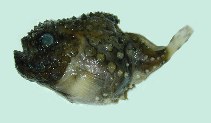 Eumicrotremus derjugini
عکس از Byrkjedal, I.
عکس ها | تصوير گوگل
عکس از Byrkjedal, I.
رده بندی / نامها اسامي عام | مترادف | Catalog of Fishes(جنس, گونه ها) | ITIS | CoL | WoRMS | Cloffa
> Perciformes/Cottoidei (Sculpins) > Cyclopteridae (Lumpfishes) > Eumicrotreminae
Etymology: Eumicrotremus: Greek, eu = good + Greek, mikros = little, small + Greek, trema = hole (Ref. 45335).
Eponymy: Professor Dr Konstantin Michailovich Derjugin (1878–1938) was an oceanographer and marine zoologist at Leningrad State University, and manager of the Oceanic Division of the State Hydrological Institute in Leningrad. [...] (Ref. 128868), visit book page.
Etymology: Eumicrotremus: Greek, eu = good + Greek, mikros = little, small + Greek, trema = hole (Ref. 45335).
Eponymy: Professor Dr Konstantin Michailovich Derjugin (1878–1938) was an oceanographer and marine zoologist at Leningrad State University, and manager of the Oceanic Division of the State Hydrological Institute in Leningrad. [...] (Ref. 128868), visit book page.
محیط زیست: محیط زیست / منطقه آب و هوایی / تغييرات عمق / محدوده توزیع بوم شناسي
دريايي نزديك كف زي; تغييرات عمق 5 - 1038 m (Ref. 117245), usually 5 - 575 m (Ref. 123372). Polar; 84°N - 50°N, 180°W - 180°E (Ref. 117245)
پراكنش سرزمینها | مناطق سازمان خوار و بار جهاني (FAO) | اکوسیستمها | ظهور | نقشه نقطه ای | معرفي | Faunafri
Arctic Ocean: Barents-Laptev Sea and the Beaufort Sea-Greenland.
Barents Sea (except southwestern part while in the northern areas, it can be found up to Spitsbergen and Franz Josef Land); Kara Sea (reaches 80°32N); Laptev Sea (eastwards to 77°46N 131°52E; Beaufort Sea (waters of the Canadian Arctic
Arch., in the Hudson Bay and Baffin Bay off the shores of the Baffin Island); eastern
Greenland (northwards to the Danish Harbor). The southern boundary of the range in
the North-West Atlantic is 60°N.
اندازه / وزن / سن
توصيف مختصر كليدهاي شناسايي | ريخت شناسي | ريخت ستجي بوسيله انداره گيري
خارهاي باله پشتي (کل) : 6 - 8; شعاع نرم باله پشتي (کل) : 10 - 13; شعاع نرم باله مخرجي: 10 - 13. This species is distinguished by the following characters: first dorsal fin in the form of dense leathery process, does not bend down to the back, trapezoidal in shape; fish 4.0-8.5 cm TL, usually have seven rows of bony plaques in interorbital region; plaques in periorbital and preopercular rows are numerous; bare space in anus area bounded by semicircle of (6) 7-10 bony plaques; number of plaques on body and head (circumpectoral, postbranchial, supraorbital and postorbital, middle and interorbital rows) on average 32.7; distance from anus to beginning of anal fin on average 22% SL; pectoral fin short, on average 50–51% HL. Colouration: when alive (in Laptev Sea), body almost black, with slightly purple tint; without pronounced spots and stripes; lower side of head is dark, rays of D2, A, and P are dark gray; translucent fin membranes D2 and A are not colored; skin under upper caudal row of plaques light; it is a continuous dark band below it; bases of A and C with light spots; belly silvery; peritoneum (inner surface of abdominal cavity) is not pigmented; lining of oral cavity light, dotted (Ref. 123372).
Body shape (shape guide): short and / or deep; Cross section: circular.
Body shape (shape guide): short and / or deep; Cross section: circular.
Found on mud, gravel or stone bottoms at temperatures below 0° C, with the young occuring in shallower water (Ref. 4701). A benthic species feeding on crustaceans and oikopleura (Ref. 58426). This species usually occurs at depths from 5 to 575 m at high water salinity (34-35 psu), with water temperatures below zero (down to -2.0°С). Recorded in Baffin Bay, down to 1038 m, and the Canadian Arctic at water temperature up to +4.93°C; Barents–Laptev Sea region, usually at the depths from 6 to 280 m, at low (from -1.9° to +1.8°C) mostly negative water temperatures and high salinity (34.03-35.25 psu), often on silt or clay sediments. In the Olenek and Lena rivers' shoals, it is found in the waters with a reduced oxygen content (86-88%), on brown-black sediments, often with a pronounced odor of hydrogen sulfide. It has never been found in the pelagic trawls. The reproduction in the Barents–Laptev Sea region probably takes place in the autumn-winter period, since the females with mature eggs (4-5 mm) are caught in the autumn. In July, the female (6.3 cm TL) from the Barents Sea had immature eggs (<1.3 mm) in the ovaries. An individual (8.5 cm TL) caught in October was with large eggs (up to 4 mm). A female (8.2 cm TL) caught on September 1, 1980, southeast of Franz Josef Land (79°46 N, 63°08 E) was with large mature eggs. In the collections from the Laptev Sea performed in September, the diameter of the eggs in mature females (8.5-10.1 cm TL) was up to 3.5-5.0 mm (IV stage of maturity). For the Canadian Arctic, spawning is reported in late summer and autumn (Ref. 123372).
چرخه زندگی و رفتار جفتگیری بلوغ | تولید مثل | تخم ریزی | تخم ها | باروری | توزاد ( لارو)
مآخذ اصلی
مراجع خود را بارگذاری کنید | مراجع | هماهنگ كننده | همكاران
Chernova, N.V., O.S. Voskoboinikova, O.Yu. Kudryavtseva, S.Yu. Orlova, O.A. Maznikova and A.M. Orlov, 2019. Taxonomic status of the Okhotsk lumpsucker Eumicrotremus ochotonensis (Cyclopteridae, Cottoidei) with redescription of E. derjugini. J. Ichthyol. 59(3):289-306. (Ref. 123372)
CITES
Not Evaluated
خطر برای انسان ها
Harmless
استفاده انسانی
FAO - Publication: search | FishSource |
اطلاعات بيشتر
پویایی جمعیت
پارامترهای رشد
حداکثر سن/اندازه
نسبت طول-وزن.
طول-طول نسبی.
نوسانات طولی
تبدیل انبوه
بازسازی
فراواني
پارامترهای رشد
حداکثر سن/اندازه
نسبت طول-وزن.
طول-طول نسبی.
نوسانات طولی
تبدیل انبوه
بازسازی
فراواني
چرخه زندگی
تولید مثل
بلوغ
بلوغ/آبششها
باروری
تخم ریزی
تجمعات تخمریزی
تخم ها
نمو تخم
توزاد ( لارو)
پويايي لاروي
تولید مثل
بلوغ
بلوغ/آبششها
باروری
تخم ریزی
تجمعات تخمریزی
تخم ها
نمو تخم
توزاد ( لارو)
پويايي لاروي
آناتومی
منطقه آبششي
مغز
اتولیت
منطقه آبششي
مغز
اتولیت
فیزیولوژی
ترکیب بدن
مواد مغذی
مصرف اکسیژن
نوع شنا
سرعت شنا
رنگدانههای بصری
صدای ماهی
بیماریها و انگلها
سمیت (LC50s)
ترکیب بدن
مواد مغذی
مصرف اکسیژن
نوع شنا
سرعت شنا
رنگدانههای بصری
صدای ماهی
بیماریها و انگلها
سمیت (LC50s)
مرتبط با انسان
سیستمهای آبزیپروری
نمايه هاي آبزي پروري
نژادها
موارد سیگواترا
تمبر، سکه، متفرقه.
سیستمهای آبزیپروری
نمايه هاي آبزي پروري
نژادها
موارد سیگواترا
تمبر، سکه، متفرقه.
ابزارها
کتاب الکترونیکی | راهنماي صحرايي | امكان نرم افزاري بسامد طولي | ابزار تاريخ زيستي | نقشه نقطه ای |
گرفتن-MSY |
گزارش های ويژه
راجع به نگهداری آکواريم ملاحظه کنيد | برگه اطلاعات و مشخصات گونه ها را ملاحظه کنيد | برگه اطلاعات و مشخصات آبزی پروری را ببينيد
بارگيری XML
منابع اينترنتي
AFORO (otoliths) | Aquatic Commons | BHL | Cloffa | Websites from users | فيش واچر را ببينيد | CISTI | Catalog of Fishes: جنس, گونه ها | DiscoverLife | ECOTOX | FAO - Publication: search | Faunafri | Fishipedia | Fishtrace | GloBI | Google Books | Google Scholar | Google | IGFA World Record | OneZoom | Open Tree of Life | Otolith Atlas of Taiwan Fishes | PubMed | Reef Life Survey | Socotra Atlas | TreeBase | Tree of Life | Wikipedia: برو, جستجو | World Records Freshwater Fishing | Zoobank | سوابق جانورشناسی
تخمینها بر اساس مدلها
دمای ترجیحی (مرجع 123201): -1.2 - 2.9, mean 0.2 °C (based on 2662 cells).
شاخص تنوع فیلوژنتیکی (مرجع 82804): PD50 = 0.5000 [Uniqueness, from 0.5 = low to 2.0 = high].
Bayesian length-weight: a=0.02089 (0.00764 - 0.05716), b=3.03 (2.80 - 3.26), in cm total length, based on LWR estimates for this (Sub)family-body shape (Ref. 93245).
سطح تروفیک (مرجع 69278): 3.3 ±0.34 se; based on food items.
جهندگی (مرجع 120179): متوسط, كمينه زمان لازم براي دو برابر شدن جمعيت 4/1 – 4/4 سال (Fecundity assumed < 1000).