



Eumicrotremus derjugini Popov, 1926
Leatherfin lumpsucker
Προσθέστε την παρατήρησή σας στο Fish Watcher
| Native range | All suitable habitat | Point map | Year 2050 |

|
| This map was computer-generated and has not yet been reviewed. |
| Eumicrotremus derjugini AquaMaps Data sources: GBIF OBIS |
Ανεβάστε το φωτογραφίες και Βίντεο
Φωτογραφίες | Google image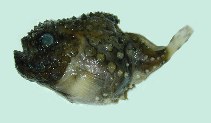 Eumicrotremus derjugini
Εικόνα από Byrkjedal, I.
Φωτογραφίες | Google image
Εικόνα από Byrkjedal, I.
Ταξινόμηση / Ονόματα Κοινά ονόματα | Συνώνυμα | Catalog of Fishes(Γένος, Είδη) | ITIS | CoL | WoRMS | Cloffa
> Perciformes/Cottoidei (Sculpins) > Cyclopteridae (Lumpfishes) > Eumicrotreminae
Etymology: Eumicrotremus: Greek, eu = good + Greek, mikros = little, small + Greek, trema = hole (Ref. 45335).
Eponymy: Professor Dr Konstantin Michailovich Derjugin (1878–1938) was an oceanographer and marine zoologist at Leningrad State University, and manager of the Oceanic Division of the State Hydrological Institute in Leningrad. [...] (Ref. 128868), visit book page.
Etymology: Eumicrotremus: Greek, eu = good + Greek, mikros = little, small + Greek, trema = hole (Ref. 45335).
Eponymy: Professor Dr Konstantin Michailovich Derjugin (1878–1938) was an oceanographer and marine zoologist at Leningrad State University, and manager of the Oceanic Division of the State Hydrological Institute in Leningrad. [...] (Ref. 128868), visit book page.
Περιβάλλον: περιβάλλον / κλιματική ζώνη / εύρος βάθους / εύρος διανομής Οικολογία
Θαλασσινό(ά) βενθικό(ς); εύρος βάθους 5 - 1038 m (Ref. 117245), usually 5 - 575 m (Ref. 123372). Polar; 84°N - 50°N, 180°W - 180°E (Ref. 117245)
Κατανομή Εδάφη | Περιοχές FAO | Οικοσυστήματα | Παρουσίες | Σημειακός χάρτης | Εισαγωγές | Faunafri
Arctic Ocean: Barents-Laptev Sea and the Beaufort Sea-Greenland.
Barents Sea (except southwestern part while in the northern areas, it can be found up to Spitsbergen and Franz Josef Land); Kara Sea (reaches 80°32N); Laptev Sea (eastwards to 77°46N 131°52E; Beaufort Sea (waters of the Canadian Arctic
Arch., in the Hudson Bay and Baffin Bay off the shores of the Baffin Island); eastern
Greenland (northwards to the Danish Harbor). The southern boundary of the range in
the North-West Atlantic is 60°N.
Μέγεθος / Βάρος / Ηλικία
Γεννητική Ωρίμανση: Lm ? range ? - ? cm
Max length : 12.7 cm TL αρσενικό/απροσδιόριστο; (Ref. 43939)
Max length : 12.7 cm TL αρσενικό/απροσδιόριστο; (Ref. 43939)
Σύντομη περιγραφή Κλείδες προσδιορισμού | Μορφολογία | Μορφομετρία
Ραχιαίες άκανθες (συνολικά) : 6 - 8; Μαλακές ραχιαίες ακτίνες (συνολικά) : 10 - 13; Μαλακές εδρικές ακτίνες: 10 - 13. This species is distinguished by the following characters: first dorsal fin in the form of dense leathery process, does not bend down to the back, trapezoidal in shape; fish 4.0-8.5 cm TL, usually have seven rows of bony plaques in interorbital region; plaques in periorbital and preopercular rows are numerous; bare space in anus area bounded by semicircle of (6) 7-10 bony plaques; number of plaques on body and head (circumpectoral, postbranchial, supraorbital and postorbital, middle and interorbital rows) on average 32.7; distance from anus to beginning of anal fin on average 22% SL; pectoral fin short, on average 50–51% HL. Colouration: when alive (in Laptev Sea), body almost black, with slightly purple tint; without pronounced spots and stripes; lower side of head is dark, rays of D2, A, and P are dark gray; translucent fin membranes D2 and A are not colored; skin under upper caudal row of plaques light; it is a continuous dark band below it; bases of A and C with light spots; belly silvery; peritoneum (inner surface of abdominal cavity) is not pigmented; lining of oral cavity light, dotted (Ref. 123372).
Body shape (shape guide): short and / or deep; Cross section: circular.
Body shape (shape guide): short and / or deep; Cross section: circular.
Found on mud, gravel or stone bottoms at temperatures below 0° C, with the young occuring in shallower water (Ref. 4701). A benthic species feeding on crustaceans and oikopleura (Ref. 58426). This species usually occurs at depths from 5 to 575 m at high water salinity (34-35 psu), with water temperatures below zero (down to -2.0°С). Recorded in Baffin Bay, down to 1038 m, and the Canadian Arctic at water temperature up to +4.93°C; Barents–Laptev Sea region, usually at the depths from 6 to 280 m, at low (from -1.9° to +1.8°C) mostly negative water temperatures and high salinity (34.03-35.25 psu), often on silt or clay sediments. In the Olenek and Lena rivers' shoals, it is found in the waters with a reduced oxygen content (86-88%), on brown-black sediments, often with a pronounced odor of hydrogen sulfide. It has never been found in the pelagic trawls. The reproduction in the Barents–Laptev Sea region probably takes place in the autumn-winter period, since the females with mature eggs (4-5 mm) are caught in the autumn. In July, the female (6.3 cm TL) from the Barents Sea had immature eggs (<1.3 mm) in the ovaries. An individual (8.5 cm TL) caught in October was with large eggs (up to 4 mm). A female (8.2 cm TL) caught on September 1, 1980, southeast of Franz Josef Land (79°46 N, 63°08 E) was with large mature eggs. In the collections from the Laptev Sea performed in September, the diameter of the eggs in mature females (8.5-10.1 cm TL) was up to 3.5-5.0 mm (IV stage of maturity). For the Canadian Arctic, spawning is reported in late summer and autumn (Ref. 123372).
Κύκλος ζωής και συμπεριφορά ζευγαρώματος Γεννητική Ωρίμανση | Αναπαραγωγή | Γεννοβολία | Αβγά | Γονιμότητα | Προνύμφες
Κύρια αναφορά
Ανεβάστε τις αναφορές σας | Αναφορές | Συντονιστής | Συνεργάτες
Chernova, N.V., O.S. Voskoboinikova, O.Yu. Kudryavtseva, S.Yu. Orlova, O.A. Maznikova and A.M. Orlov, 2019. Taxonomic status of the Okhotsk lumpsucker Eumicrotremus ochotonensis (Cyclopteridae, Cottoidei) with redescription of E. derjugini. J. Ichthyol. 59(3):289-306. (Ref. 123372)
CITES
Not Evaluated
Απειλή για τον άνθρωπο
Harmless
Ανθρώπινες χρήσεις
FAO - Publication: search | FishSource |
Περισσότερες πληροφορίες
Πληθυσμιακή δυναμική
Παράμετροι Αύξησης
Μέγιστες ηλικίες / μεγέθη
Μήκος-βάρος σχετ.
Μήκος-μήκος rel.
Μήκος-συχνότητες
Μετατροπή μάζας
Στρατολόγηση
Αφθονία
Παράμετροι Αύξησης
Μέγιστες ηλικίες / μεγέθη
Μήκος-βάρος σχετ.
Μήκος-μήκος rel.
Μήκος-συχνότητες
Μετατροπή μάζας
Στρατολόγηση
Αφθονία
Κύκλος ζωής
Αναπαραγωγή
Γεννητική Ωρίμανση
Ωριμότητα / Gills rel.
Γονιμότητα
Γεννοβολία
Συγκεντρώσεις αναπαραγωγής
Αβγά
Ανάπτυξη αυγών
Προνύμφες
Δυναμική προνυμφών
Αναπαραγωγή
Γεννητική Ωρίμανση
Ωριμότητα / Gills rel.
Γονιμότητα
Γεννοβολία
Συγκεντρώσεις αναπαραγωγής
Αβγά
Ανάπτυξη αυγών
Προνύμφες
Δυναμική προνυμφών
Ανατομία
Επιφάνεια βραγχίων
Εγκέφαλος
Ωτόλιθος
Επιφάνεια βραγχίων
Εγκέφαλος
Ωτόλιθος
Φυσιολογία
Σύνθεση σώματος
Θρεπτικά συστατικά
Κατανάλωση οξυγόνου
Τύπος κολύμβησης
Ταχύτητα κολύμβησης
Οπτικές χρωστικές ουσίες
Ήχος ψαριών
Ασθένειες & παράσιτα
Τοξικότητα (LC50)
Σύνθεση σώματος
Θρεπτικά συστατικά
Κατανάλωση οξυγόνου
Τύπος κολύμβησης
Ταχύτητα κολύμβησης
Οπτικές χρωστικές ουσίες
Ήχος ψαριών
Ασθένειες & παράσιτα
Τοξικότητα (LC50)
Ανθρώπινη σχέση
Συστήματα υδατοκαλλιέργειας
Προφίλ υδατοκαλλιεργειών
Στελέχοι
Περιπτώσεις Ciguatera
Γραμματόσημα, νομίσματα, διάφορα.
Συστήματα υδατοκαλλιέργειας
Προφίλ υδατοκαλλιεργειών
Στελέχοι
Περιπτώσεις Ciguatera
Γραμματόσημα, νομίσματα, διάφορα.
Εργαλεία
Ηλεκτρονικό βιβλίο | Οδηγός πεδίου | Ανάλυση κατά μήκος συνθέσεων | Εργαλείο ιστορίας ζωής | Σημειακός χάρτης |
Catch-MSY |
Ειδικές εκθέσεις
Έλεγχος για συντήρηση ενυδρείου | Ελέγξτε για ενημερωτικά δελτία ειδών | Ελέγξτε για ενημερωτικά δελτία υδατοκαλλιέργειας
Λήψη XML
Διαδικτυακές πηγές
AFORO (otoliths) | Aquatic Commons | BHL | Cloffa | Websites from users | Check FishWatcher | CISTI | Catalog of Fishes: Γένος, Είδη | DiscoverLife | ECOTOX | FAO - Publication: search | Faunafri | Fishipedia | Fishtrace | GloBI | Google Books | Google Scholar | Google | IGFA World Record | OneZoom | Open Tree of Life | Otolith Atlas of Taiwan Fishes | PubMed | Reef Life Survey | Socotra Atlas | TreeBase | Δέντρο Ζωής | Wikipedia: Go, αναζήτηση | World Records Freshwater Fishing | Zoobank | Zoological Record
Εκτιμήσεις βάσει μοντέλων
Προτιμώμενη θερμοκρασία (Αναφ. 123201): -1.2 - 2.9, mean 0.2 °C (based on 2662 cells).
Δείκτης φυλογενετικής ποικιλότητας (Αναφ. 82804): PD50 = 0.5000 [Uniqueness, from 0.5 = low to 2.0 = high].
Bayesian length-weight: a=0.02089 (0.00764 - 0.05716), b=3.03 (2.80 - 3.26), in cm total length, based on LWR estimates for this (Sub)family-body shape (Ref. 93245).
Τροφικό Επίπεδο (Αναφ. 69278): 3.3 ±0.34 se; based on food items.
Ελαστικότητα (Αναφ. 120179): Μεσαίο(α), ελάχιστος χρόνος για διπλασιασμό πληθυσμού 1,4 - 4,4 έτη (Fecundity assumed < 1000).