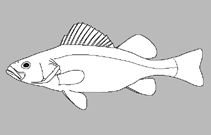
رده بندی / Names
اسامي عام | مترادف | Catalog of Fishes(جنس, گونه ها) | ITIS | CoL | WoRMS | Cloffa
Environment: milieu / climate zone / تغييرات عمق / distribution range
بوم شناسي
; آب شيرين موجوداتی که در محدوده وسیعی از آبهای آزاد از نزدیک بستر و یا روی کف بستر، در قسمت های میان آبی تا سطح آب و در برخی گونه ها با قابلیت پرواز، زندگی و تغذیه می کنند.. Temperate
North America: Duck River system and Whiteoak Creek, Western Highland Rim in Tennessee, USA.
Size / Weight / سن
بلوغ: Lm ? range ? - ? cm
Max length : 13.7 cm SL جنس نر / بدون خواص جنسي; (Ref. 116752); 13.4 cm SL (female)
توصيف مختصر
كليدهاي شناسايي | ريخت شناسي | ريخت ستجي بوسيله انداره گيري
خارهاي باله پشتي (کل) : 14 - 18; شعاع نرم باله پشتي (کل) : 14 - 17; شعاع نرم باله مخرجي: 11 - 13. Percina apina can be distinguished by having the following characters: dorsum with about 11 dark saddles that are interspersed with vermiculated patches of pigment that extend to the side of the body; 7 to 9 dark, large round or oval shaped lateral blotches along the side of the body that are typically wider than high; anterior-most blotches are just posterior of the operculum and are smaller in size, as is the most posterior blotch, which is often confluent with a distinct caudal spot; a moderate to diffuse suborbital bar of pigment; males in nuptial condition with a gold-green background color with an overall duskiness and a blue-green iridescence on the cheeks and side of the body; first dorsal fin with an intense orange submarginal band distal to a narrow yellow band of coloration with a wide and basal band comprising uniform streaks of brown-orange pigment; distal margin of the second dorsal fin lightly pigmented with a proximate band of dusky orange coloration and a tessellated basal margin; caudal fin with light bands of pigment and the distal margin slightly pigmented in nuptial males; nuptial males with anal fin yellowgold distally with a basal peppering of dark pigment; males in nuptial condition with membranes of the pelvic fin filled with jet-black pigment, and the pectoral fin membranes slightly peppered with dark pigment (Ref. 116752).
Body shape (shape guide): elongated.
Habitats of this species differ between reproductive and non-reproductive periods. Both sexes in in reproductive condition were most often found in swift runs of depths about one meter or less with predominant gravel and cobble substrates. On many occasions, adult males were collected in shallow, swift riffles with gravel bottoms during late April to early June. In summer months, adult males and females occurred in swift runs and in pool areas with substrates free of silt. Subadults were only encountered in pool habitats and were usually accompanied by adult females (Ref. 116752).
Life cycle and mating behavior
بلوغ | تولید مثل | تخم ریزی | تخم ها | Fecundity | توزاد ( لارو)
Near, T.J., J.W. Simmons, J.M. Mollish, M.A. Correa, E. Benavides, R.C. Harrington and B.P. Keck, 2017. A new species of longperch endemic to Tennessee (Percidae: Etheostomatinae: Percina). Bulletin of the Peabody Museum of Natural History 58(2):287-309. (Ref. 116752)
وضعيت در فهرست قرمز IUCN (Ref. 130435: Version 2025-1)
خطر برای انسان ها
Harmless
استفاده انسانی
ابزارها
گزارش های ويژه
بارگيری XML
منابع اينترنتي
Estimates based on models
Phylogenetic diversity index (مرجع
82804): PD
50 = 0.5000 [Uniqueness, from 0.5 = low to 2.0 = high].
Bayesian length-weight: a=0.00575 (0.00268 - 0.01234), b=3.13 (2.95 - 3.31), in cm total length, based on LWR estimates for this (Sub)family-body shape (Ref.
93245).
Trophic level (مرجع
69278): 3.5 ±0.5 se; based on size and trophs of closest relatives
جهندگی (مرجع
120179): متوسط, كمينه زمان لازم براي دو برابر شدن جمعيت 4/1 – 4/4 سال (Preliminary K or Fecundity.).
Fishing Vulnerability (Ref.
59153): Low vulnerability (10 of 100).
🛈