



Добавить Ваши наблюдения в Fish Watcher
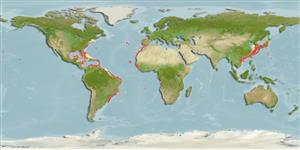
| Native range | All suitable habitat | Point map | Year 2050 |
|
| This map was computer-generated and has not yet been reviewed. |
| Isistius plutodus AquaMaps Data sources: GBIF OBIS |
Загрузить свой Фото и Видео
изображения | Изображение на Google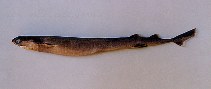 Isistius plutodus
Juvenile Изображение сделано Sazima, I.
изображения | Изображение на Google
Juvenile Изображение сделано Sazima, I.
Классификация / Имена народные названия | синонимы | Catalog of Fishes(род, виды) | ITIS | CoL | WoRMS | Cloffa
Пластиножаберные (акулы и скаты) (sharks and rays) > Squaliformes (Sleeper and dogfish sharks) > Dalatiidae (Sleeper sharks)
Etymology: Isistius: Etymology not explained, probably iso-, from isos (Gr.), equal; istius, from histion (Gr.), sail (i.e., dorsal fin), referring to its two similarly shaped and sized (and posterior) dorsal fins, a character Gill used to diagnose genus. José I. Castro, The Sharks of North America (Oxford University Press, 2011), suggests name may allude to the Egyptian goddess Isis, represented in statuary with her head veiled, or to the dark collar encircling throat of I. brasiliensis, “which could also suggest a veil over the head” (p. 145). This interpretation is rejected by the fact that Gill often used “istius” in the names of several genera distinguished (at least in part) by their dorsal fins (Acanthistius, Brachyistius, Caristius, Dichistius, Goniistius, Iniistius, Micromesistius, Nematistius) (See ETYFish); plutodus: ploutos (Gr.), wealth or abundance; odon (Gr.), tooth, referring to larger size of lower jaw teeth compared with congeners (See ETYFish).
Etymology: Isistius: Etymology not explained, probably iso-, from isos (Gr.), equal; istius, from histion (Gr.), sail (i.e., dorsal fin), referring to its two similarly shaped and sized (and posterior) dorsal fins, a character Gill used to diagnose genus. José I. Castro, The Sharks of North America (Oxford University Press, 2011), suggests name may allude to the Egyptian goddess Isis, represented in statuary with her head veiled, or to the dark collar encircling throat of I. brasiliensis, “which could also suggest a veil over the head” (p. 145). This interpretation is rejected by the fact that Gill often used “istius” in the names of several genera distinguished (at least in part) by their dorsal fins (Acanthistius, Brachyistius, Caristius, Dichistius, Goniistius, Iniistius, Micromesistius, Nematistius) (See ETYFish); plutodus: ploutos (Gr.), wealth or abundance; odon (Gr.), tooth, referring to larger size of lower jaw teeth compared with congeners (See ETYFish).
Окружающая среда: среда / климатическая зона / пределы глубины / диапазон распространения экология
морской pelagic-neritic; пределы глубины 60 - 200 m (Ref. 52580). Subtropical; 44°N - 33°S (Ref. 52580)
распространение Территории | регионы FAO | Экосистемы | места находок | карта точек | интродукции | Faunafri
Atlantic: off Alabama, USA and the Gulf of Mexico; including Brazil and West Sahara and off Azores. Northwest Pacific: off Okinawa, Japan and Australia (NSW). A very rare species (Ref. 52580).
Размер / Вес / Возраст
половая зрелость: Lm ? range ? - ? cm
Max length : 42.3 cm TL (female)
Max length : 42.3 cm TL (female)
Краткое описание определительные ключи | морфология | морфометрия
колючие лучи спинного плавника (общее число) : 0. The largetooth cookiecutter shark Isistius plutodus has no collar marking around throat, a small asymmetrical caudal fin with a short ventral lobe less than half the length of dorsal caudal margin, bigger mouth and gigantic lower teeth (proportionately the largest in any living shark) in 19 rows (upper teeth = 29 rows). Eyes set well forward on head, with extensive anterior binocular field. Pectoral fins rounded, pelvic fins smaller than dorsal fins.
As with the other member of the genus Isistius, it has a characteristic small cigar-shaped body with two small close-set spineless dorsal fins far posterior on back, no anal fin, huge, triangular-cusped teeth without blades, short, bulbous snout and a unique suctorial lips (Ref. 247).
Body shape (shape guide): elongated.
Body shape (shape guide): elongated.
A very rare species known only from few localities in epipelagic waters. Apparently feeds on small epibenthic and epipelagic invertebrates and fish. Its powerful jaws, big mouth and enormous lower teeth enable it to bite off large portion of its prey in one sweeping motion. A facultative ectoparasite evidenced by its suctorial lips and feeding apparatus. It has extremely short snout and anteriorly positioned eyes which allows for binocular vision (Ref. 247). Caught by mid-water trawl (Ref. 55584). Ovoviviparous (Ref. 205). Has large oily liver which helps it to become neutrally buoyant (`hepatic float').
Жизненный цикл и брачное поведение половая зрелость | размножение | нерест | икра | Плодовитость | личинки
Distinct pairing with embrace (Ref. 205).
Основная ссылка
Загрузите свои рекомендации | ссылки | координатор : Compagno, Leonard J.V. | соавторы
Compagno, L.J.V., 1984. FAO Species Catalogue. Vol. 4. Sharks of the world. An annotated and illustrated catalogue of shark species known to date. Part 1 - Hexanchiformes to Lamniformes. FAO Fish. Synop. 125(4/1):1-249. Rome, FAO. (Ref. 247)
Статус Красного Списка МСОП (Ref. 130435: Version 2025-2 (Global))
Не вызывающий беспокойства (LC) ; Date assessed: 15 May 2024
CITES
Not Evaluated
Угроза для людей
Harmless
Использование человеком
рыболовство: интереса не представляет
FAO - Publication: search | FishSource |
дополнительная информация
Трофическая экология
Пищевые предметы (добыча)
состав пищи
потребление пищи
Продовольственные пайки
хищники
Пищевые предметы (добыча)
состав пищи
потребление пищи
Продовольственные пайки
хищники
Динамика численности населения
Параметры роста
Макс. возраст / размер
Отношение длины к весу.
Отношение длины к длине.
Размерный состав
Преобразование массы
пополнение
численность
Параметры роста
Макс. возраст / размер
Отношение длины к весу.
Отношение длины к длине.
Размерный состав
Преобразование массы
пополнение
численность
Жизненный цикл
размножение
половая зрелость
Зрелость/Жиры относительно.
Плодовитость
нерест
Нерестовые скопления
икра
Развитие икры
личинки
динамика численности личинок
размножение
половая зрелость
Зрелость/Жиры относительно.
Плодовитость
нерест
Нерестовые скопления
икра
Развитие икры
личинки
динамика численности личинок
Анатомия
жаберная область
Мозг
Отолит
жаберная область
Мозг
Отолит
Физиология
Состав тела
Питательные вещества
Потребление кислорода
Тип плавания
Скорость плавания
Зрительные пигменты
Звук рыбы
Болезни и паразиты
Токсичность (LC50s)
Состав тела
Питательные вещества
Потребление кислорода
Тип плавания
Скорость плавания
Зрительные пигменты
Звук рыбы
Болезни и паразиты
Токсичность (LC50s)
генетика
Геном
генетика
Гетерозиготность
наследуемость
Генетическое разнообразие
Геном
генетика
Гетерозиготность
наследуемость
Генетическое разнообразие
Связанные с человеком
Системы аквакультуры
особенности рыбоводства
степень растяжения
Случаи заболевания сигуатерой
Марки, монеты и прочее.
Системы аквакультуры
особенности рыбоводства
степень растяжения
Случаи заболевания сигуатерой
Марки, монеты и прочее.
инструменты
Электронная книга | полевой определитель | определительные ключи | Длина-Частота | онтогенез | карта точек |
Catch-MSY |
Специальные отчеты
Проверить содержание в аквариумах | Проверить опубликованные видовые данные | Проверить опубликованные данные по аквакультуре
Скачать в формате XML
ресурсы в Интернет
AFORO (otoliths) | Aquatic Commons | BHL | Cloffa | Websites from users | Проверить FishWatcher | CISTI | Catalog of Fishes: род, виды | DiscoverLife | ECOTOX | FAO - Publication: search | Faunafri | Fishipedia | Fishtrace | GloBI | Google Books | Google Scholar | Google | IGFA World Record | OneZoom | Open Tree of Life | Otolith Atlas of Taiwan Fishes | PubMed | Reef Life Survey | Socotra Atlas | TreeBase | Tree of Life | Wikipedia: Вперёд, поиск | World Records Freshwater Fishing | Zoobank | Зоологическая летопись
Оценки, основанные на моделях
Предпочтительная температура (ссылка 123201): 14.1 - 25.1, mean 18.8 °C (based on 225 cells).
Индекс филогенетического разнообразия (ссылка 82804): PD50 = 0.7510 [Uniqueness, from 0.5 = low to 2.0 = high].
Bayesian length-weight: a=0.00263 (0.00139 - 0.00499), b=3.10 (2.92 - 3.28), in cm total length, based on LWR estimates for this species & (Sub)family-body (Ref. 93245).
Трофический уровень (ссылка 69278): 4.2 ±0.4 se; based on size and trophs of closest relatives
устойчивость к внешним воздействиям (ссылка 120179): низкий, минимальное время удвоения популяции 4.5-14 лет (Fec assumed to be <100).