This website uses cookies to enhance your browsing experience and ensure the functionality of our site. For more detailed information about the types of cookies we use and how we protect your privacy, please visit our Privacy Information page.
×
Cookie Settings
This website uses different types of cookies to enhance your experience. Please select your preferences below:
> Ovalentaria/misc (Various families in series Ovalentaria) > Pseudochromidae (Dottybacks) > Pseudochrominae
Etymology: Ogilbyina:Taken from Ogilby, 1887-1915, icthiologist and zoologist (Ref. 45335). Eponymy: James Douglas Ogilby (1853–1925) was an Irish-born Australian ichthyologist and taxonomist, son of the famous zoologist William Ogilby (below). [...] (Ref. 128868), visit book page. More on author: Saville-Kent.
Entorno: milieu / zona climática / rango de profundidad / gama de distribución Ecología
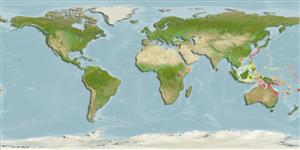
marino asociado a arrecife; rango de profundidad 1 - 20 m (Ref. 9710), usually 10 - 20 m (Ref. 9710). Tropical
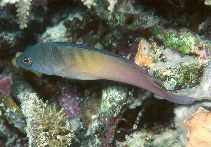
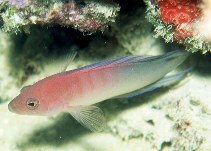
Espinas dorsales (total) : 3; Radios blandos dorsales (total) : 32 - 37; Espinas anales: 3; Radios blandos anales: 18 - 21. Color variable depending on sex; male mainly red anteriorly and purplish posteriorly; dorsal, anal and caudal fins bluish except dorsal reddish on anterior part; female with a grayish head, largely yellow-orange on side, with 5-6 brown bars on upper half of anterior part of body; fins largely reddish (Ref. 2334). Body shape (shape guide): fusiform / normal.
Usually found in or near holes of coral reefs (Ref. 9710). Minimum depth from https://www.reeflifesurvey.com/species/ogilbyina-queenslandiae/.
Ciclo vital y comportamiento de apareamiento Madurez | Reproducción | Puesta | Huevos | Fecundidad | Larva
Bi-directional sex change has been proposed for this species though histological analysis of more specimens is needed for confirmation (Ref. 103751).
Paxton, J.R., D.F. Hoese, G.R. Allen and J.E. Hanley, 1989. Pisces. Petromyzontidae to Carangidae. Zoological Catalogue of Australia, Vol. 7. Australian Government Publishing Service, Canberra, 665 p. (Ref. 7300)
Situación en la Lista Roja de la UICN (Ref. 130435: Version 2025-2 (Global))
Ecología Trófica Alimentos (presas) Composición de la dieta consumo de alimento Raciones de comida Despredadores
Ecología Ecología
Dinámica de la población Coeficiente del crecimiento para Edades / tallas máximas Longitud-peso rel. Longitud-longitud rel. Longitud-frecuencias Conversión de masas Reclutamiento Abundancia
Ciclo de vida Reproducción Madurez Madurez/Gills rel. Fecundidad Puesta Agregaciones de desove Huevos Desarrollo de los huevos Larva Dinámica larvaria
Fisiología Composición corporal Nutrientes Consumo del oxígeno Tipo de natación Velocidad de natación Pigmentos visuales Sonido de peces Enfermedades y parásitos Toxicidad (CL50)
Temperatura preferida (Referencia 123201): 24.6 - 27.9, mean 26.6 °C (based on 72 cells).
Índice de diversidad filogenética (Referencia 82804): PD50 = 0.6250 [Uniqueness, from 0.5 = low to 2.0 = high].
Bayesian length-weight: a=0.01148 (0.00470 - 0.02806), b=2.95 (2.74 - 3.16), in cm total length, based on LWR estimates for this (Sub)family-body shape (Ref. 93245).
Nivel trófico (Referencia 69278): 3.8 ±0.5 se; based on size and trophs of closest relatives
Resiliencia (Referencia 120179): Alto, población duplicada en un tiempo mínimo inferior a 15 meses (Preliminary K or Fecundity.).
Vulnerabilidad pesquera (Ref. 59153): Low vulnerability (10 of 100). 🛈