



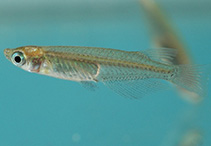
分類 / 名稱 俗名 | 同種異名 | Catalog of Fishes(屬, 種) | ITIS | CoL | WoRMS | Cloffa
Teleostei > Beloniformes (Needle fishes) 頜針魚目 (Needle fishes) > Adrianichthyidae (Ricefishes) 異鱂科 (Ricefishes) > Oryziinae
Etymology: Oryzias: Greek, oryza = rice; because of the habitat used by this fish (Ref. 45335).
More on authors: Temminck & Schlegel.
Etymology: Oryzias: Greek, oryza = rice; because of the habitat used by this fish (Ref. 45335).
More on authors: Temminck & Schlegel.
環境: 環境 / 氣候帶 / 深度上下限 / 配送範圍 生態學
; 淡水; 半鹹淡水 底中水層性; pH range: 7.0 - 8.0; dH range: 9 - 19; 非產卵性溯降河的 (Ref. 51243). 亞熱帶的; 18°C - 24°C (Ref. 2060); 55°N - 10°N, 85°E - 105°E
分布 領土 | FAO區域 | 生態系 | 發現紀錄 | 分布圖 | 簡介 | Faunafri
Asia: Japan, Korea, China and Viet Nam. Reported from the middle Nam Theun, Mekong, Irrawaddy, Salween, Red River and Nanpangjiang in basins (Ref. 27732).
亞洲: 日本,韓國,中國與越南。 記錄來自南能河中游,湄公河,依洛瓦底江,薩爾溫江,紅河與南盤江流域了。 (參考文獻 27732)
亞洲: 日本,韓國,中國與越南。 記錄來自南能河中游,湄公河,依洛瓦底江,薩爾溫江,紅河與南盤江流域了。 (參考文獻 27732)
大小 / 重量 / 年齡
簡短描述 檢索表 | 型態特徵 | 形態測量圖
背的軟條 (總數) : 6 - 7; 臀鰭軟條: 15 - 21; 脊椎骨: 30 - 31. Meristic characters mainly from Nam Theun, Laos sample only (Ref. 27658). Scale count refers to the scales in longitudinal row (Ref. 41299).
Body shape (shape guide): elongated.
體節形質特徵主要地從寮國的南能河只抽樣調查。 (參考文獻 27658) 鱗片計數在縱向的列中參考依據為鱗片。 (參考文獻 41299)
Body shape (shape guide): elongated.
體節形質特徵主要地從寮國的南能河只抽樣調查。 (參考文獻 27658) 鱗片計數在縱向的列中參考依據為鱗片。 (參考文獻 41299)
Adults occur in ponds, marshes, paddy fields and small flows of plains (Ref. 41299). They prefer slow-moving streams. Inhabit mainly waters of lowlands and brackish water, and also known to inhabit tide pools of coasts of certain regions in Japan and Korea. They can withstand a wide range of salinity (Ref. 58933). Omnivorous (Ref. 58933). For indoor culture, a diluted sea water is rather better than the freshwater , and the use of a balanced salt solution is recommended, if the tap water proves to be unsuitable (Ref. 58933). Used in experimental research (Ref. 4537). Non-annual breeders. Are easy to maintain in the aquarium (Ref. 27139). A fluorescent ornamental variety (genetically modified fish), a product of fluorescent protein extracted from jellyfish and attaching to DNA in embryonic fish of this is now being sold in the aquarium trade (Ref. 48573).
出現於平原的池塘,濕地,稻田與小水流。 (參考文獻 41299) 偏愛緩慢移動的溪流。 主要棲息於低地與半淡鹹水的水域, 以及知道在日本與韓國居住於特定區域的海岸的潮池。 抵抗寬範圍的鹽度。 (參考文獻 58933) 雜食性.(參考文獻 58933) 對於戶內的養殖,一個被沖淡的海水相當比淡水更好,而且被平衡的含鹽解決方案的使用被推薦, 如果自來水證明是不適合的。 (參考文獻 58933) 被用於實驗的研究.。 (參考文獻 4537) 非年度生殖者。 容易在水族館維持。 (參考文獻 27139) 一個點綴著螢光的變種 (在遺傳基因上修正魚), 一種螢光蛋白質的產品從水母吸取.,而且在胚胎魚中吸附到 DNA 現在這正在在水族貿易被賣。 (參考文獻 48573)
出現於平原的池塘,濕地,稻田與小水流。 (參考文獻 41299) 偏愛緩慢移動的溪流。 主要棲息於低地與半淡鹹水的水域, 以及知道在日本與韓國居住於特定區域的海岸的潮池。 抵抗寬範圍的鹽度。 (參考文獻 58933) 雜食性.(參考文獻 58933) 對於戶內的養殖,一個被沖淡的海水相當比淡水更好,而且被平衡的含鹽解決方案的使用被推薦, 如果自來水證明是不適合的。 (參考文獻 58933) 被用於實驗的研究.。 (參考文獻 4537) 非年度生殖者。 容易在水族館維持。 (參考文獻 27139) 一個點綴著螢光的變種 (在遺傳基因上修正魚), 一種螢光蛋白質的產品從水母吸取.,而且在胚胎魚中吸附到 DNA 現在這正在在水族貿易被賣。 (參考文獻 48573)
生命週期和交配行為 成熟度 | 繁殖 | 產卵場 | 卵 | 孕卵數 | 仔魚
Carries eggs for some time before deposition (Ref. 7471). Oocytes mature at night followed by ovulation at dawn (Ref. 58942).亞洲: 日本,韓國,中國與越南。 記錄來自南能河中游,湄公河,依洛瓦底江,薩爾溫江,紅河與南盤江流域了。 (參考文獻 27732)
主要參考資料
上傳您的推薦信 | 參考文獻 | 合作者 : Seegers, Lothar | 合作者
Roberts, T.R., 1998. Systematic observations on tropical Asian medakas or ricefishes of the genus Oryzias, with descriptions of four new species. Ichthyol. Res. 45(3):213-224. (Ref. 27658)
CITES
Not Evaluated
對人類具威脅
無害處的
人類使用
漁業: 商業性; 水族館: 商業性
FAO - Publication: search | FishSource |
更多資訊
工具
特別的報告
下載 XML
網路資源
AFORO (otoliths) | Alien/Invasive Species database | Aquatic Commons | BHL | Cloffa | Websites from users | 檢查 FishWatcher | CISTI | Catalog of Fishes: 屬, 種 | DiscoverLife | ECOTOX | FAO - Publication: search | Faunafri | Fishipedia | Fishtrace | GloBI | Google Books | Google Scholar | Google | IGFA World Record | 國家資料庫 | OneZoom | Open Tree of Life | Otolith Atlas of Taiwan Fishes | 公眾的水族館 | PubMed | Reef Life Survey | Socotra Atlas | TreeBase | 樹狀分類階層 | Wikipedia: 去, 搜尋 | World Records Freshwater Fishing | 動物學的記錄
基於模型的估計
系統發育多樣性指數 (參考文獻 82804): PD50 = 0.5000 [Uniqueness, from 0.5 = low to 2.0 = high].
Bayesian length-weight: a=0.00479 (0.00190 - 0.01207), b=3.13 (2.91 - 3.35), in cm total length, based on LWR estimates for this (Sub)family-body shape (Ref. 93245).
營養階層 (參考文獻 69278): 3.4 ±0.45 se; based on food items.
Generation time: 0.3 ( na - na) years. Estimated as median ln(3)/K based on 1 growth studies.
回復力 (參考文獻 120179): 低的, 最小族群倍增時間4.5 - 14 年 (tm<1; Fec=40).