



分類 / 名前 共通名の | 類義語 | Catalog of Fishes(部類, 種) | ITIS | CoL | WoRMS | Cloffa
> Beloniformes (Needle fishes) > Adrianichthyidae (Ricefishes) > Oryziinae
Etymology: Oryzias: Greek, oryza = rice; because of the habitat used by this fish (Ref. 45335).
More on authors: Temminck & Schlegel.
Etymology: Oryzias: Greek, oryza = rice; because of the habitat used by this fish (Ref. 45335).
More on authors: Temminck & Schlegel.
環境:環境 / 気候帯 / 深さの範囲 / 分布範囲 生態学
; 新鮮な水; 汽水性の 底生の漂泳性; pH range: 7.0 - 8.0; dH range: 9 - 19; 両側回遊性 (Ref. 51243). Subtropical; 18°C - 24°C (Ref. 2060); 55°N - 10°N, 85°E - 105°E
分布 領土 | 国連食糧農業機関の区域 | エコシステム | 事件 | 目的のマップ | 導入 | Faunafri
Asia: Japan, Korea, China and Viet Nam. Reported from the middle Nam Theun, Mekong, Irrawaddy, Salween, Red River and Nanpangjiang in basins (Ref. 27732).
サイズ / 重さ / 年齢
簡単な記述 検索表 | 形態学 | 形態計測学
背鰭 (合計) : 6 - 7; 臀鰭: 15 - 21; 脊つい: 30 - 31. Meristic characters mainly from Nam Theun, Laos sample only (Ref. 27658). Scale count refers to the scales in longitudinal row (Ref. 41299).
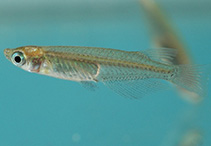
Body shape (shape guide): elongated.
Body shape (shape guide): elongated.
Adults occur in ponds, marshes, paddy fields and small flows of plains (Ref. 41299). They prefer slow-moving streams. Inhabit mainly waters of lowlands and brackish water, and also known to inhabit tide pools of coasts of certain regions in Japan and Korea. They can withstand a wide range of salinity (Ref. 58933). Omnivorous (Ref. 58933). For indoor culture, a diluted sea water is rather better than the freshwater , and the use of a balanced salt solution is recommended, if the tap water proves to be unsuitable (Ref. 58933). Used in experimental research (Ref. 4537). Non-annual breeders. Are easy to maintain in the aquarium (Ref. 27139). A fluorescent ornamental variety (genetically modified fish), a product of fluorescent protein extracted from jellyfish and attaching to DNA in embryonic fish of this is now being sold in the aquarium trade (Ref. 48573).
ライフサイクルと交尾行動 成熟 | 繁殖 | 放精 | 卵 | 生産力 | 幼生
Carries eggs for some time before deposition (Ref. 7471). Oocytes mature at night followed by ovulation at dawn (Ref. 58942).
主な参考文献
参考文献のアップロード | 参考文献 | コーディネーター : Seegers, Lothar | 協力者
Roberts, T.R., 1998. Systematic observations on tropical Asian medakas or ricefishes of the genus Oryzias, with descriptions of four new species. Ichthyol. Res. 45(3):213-224. (Ref. 27658)
CITES
Not Evaluated
人間に対する脅威
Harmless
人間の用途
水産業: 商業; 水族館・水槽: 商業
FAO - Publication: search | FishSource |
より多くの情報
用具
特記事項
XMLをダウンロードして下さい
インターネットの情報源
AFORO (otoliths) | Alien/Invasive Species database | Aquatic Commons | BHL | Cloffa | Websites from users | Check FishWatcher | CISTI | Catalog of Fishes: 部類, 種 | DiscoverLife | ECOTOX | FAO - Publication: search | Faunafri | Fishipedia | Fishtrace | GloBI | Google Books | Google Scholar | Google | IGFA World Record | 国のデーターベース | OneZoom | Open Tree of Life | Otolith Atlas of Taiwan Fishes | 公共の水族館 | PubMed | Reef Life Survey | Socotra Atlas | TreeBase | 生命の木 | Wikipedia: 行く, 検索する | World Records Freshwater Fishing | 動物に関する記録
モデルに基づく推定値
系統多様性指数 (参照 82804): PD50 = 0.5000 [Uniqueness, from 0.5 = low to 2.0 = high].
Bayesian length-weight: a=0.00479 (0.00190 - 0.01207), b=3.13 (2.91 - 3.35), in cm total length, based on LWR estimates for this (Sub)family-body shape (Ref. 93245).
栄養段階 (参照 69278): 3.4 ±0.45 se; based on food items.
Generation time: 0.3 ( na - na) years. Estimated as median ln(3)/K based on 1 growth studies.
回復力 (参照 120179): 低い, 4.5年~14年の倍増期間の最小個体群 (tm<1; Fec=40).