



Nudiantennarius subteres (Smith & Radcliffe, 1912)
Deep-water frogfish
Ανεβάστε το φωτογραφίες και Βίντεο
Φωτογραφίες | Google image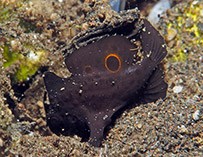 Nudiantennarius subteres
Εικόνα από Johnson, S.
Φωτογραφίες | Google image
Εικόνα από Johnson, S.
Ταξινόμηση / Ονόματα Κοινά ονόματα | Συνώνυμα | Catalog of Fishes(Γένος, Είδη) | ITIS | CoL | WoRMS | Cloffa
> Lophiiformes (Anglerfishes) > Antennariidae (Frogfishes)
Etymology: Nudiantennarius: Latin, nudus = naked + Latin, antemna = sensory organ; in Aristotle = horn (Ref. 45335).
More on authors: Smith & Radcliffe.
Etymology: Nudiantennarius: Latin, nudus = naked + Latin, antemna = sensory organ; in Aristotle = horn (Ref. 45335).
More on authors: Smith & Radcliffe.
Περιβάλλον: περιβάλλον / κλιματική ζώνη / εύρος βάθους / εύρος διανομής Οικολογία
Θαλασσινό(ά) βενθικό(ς); μη μεταναστευτικό(ά); εύρος βάθους 3 - 128 m (Ref. 116699). Tropical; 18°N - 11°S, 119°E - 122°E (Ref. 57386)
Κατανομή Εδάφη | Περιοχές FAO | Οικοσυστήματα | Παρουσίες | Σημειακός χάρτης | Εισαγωγές | Faunafri
Western Central Pacific: Philippines and Indonesia.
Μέγεθος / Βάρος / Ηλικία
Σύντομη περιγραφή Κλείδες προσδιορισμού | Μορφολογία | Μορφομετρία
Μαλακές ραχιαίες ακτίνες (συνολικά) : 12; Μαλακές εδρικές ακτίνες: 7. This species is distinguished by the following combination of character states: reduced dermal spinules, skin only partially covered with bifurcate dermal spinules, that the body appears to be naked, length of spines of each spinule not more than twice the distance between tips of spines; distinct esca ; naked illicium, no dermal spinules, about half length of second dorsal-fin spine; second dorsal-fin spine is unusually long, narrow, without posterior membrane; narrow pectoral-fin lobe, somewhat detached from side of body; with caudal peduncle, the membranous posteriormost margin of soft-dorsal and anal fins attached to body distinctly anterior to base of outermost rays of caudal fin; all rays of caudal fin are usually bifurcate (outermost caudal fin rays simple, 7 innermost bifurcate in UW 117643 and CBG 13028); presence of endopterygoid, pharyngobranchial I, epural and swim bladder; absence of pseudobranch I; D 12; A 7; pectoral-fin rays 9 pelvic-fin rays 5, all simple (posteriormost ray not bifurcated); membranes between rays of paired fins are deeply incised; one or more large basidorsal ocelli often present (Ref. 116699).
Body shape (shape guide): short and / or deep.
Body shape (shape guide): short and / or deep.
Typically found in bottoms of brown or black sand, silt, or mud, with some soft corals, gorgonians, and sponges, but very little hard coral; also on pier pilings and occasionally among small patches of filamentous and leafy algae. Also observed to occur in the following habitats of collection sites: from 3-9 m, no deeper than about 18 m with large amounts of tree litter in the shallows, and a lot of trash, rubbish, and human refuse, especially those near native villages and towns (Lembeh Strait); no deeper than 6 m with bottom largely made up of very coarse sand or fine coral rubble, with some hard corals and gorgonians, numerous small cephalopods, many shrimps, crabs, other crustaceans, and lots of fishes, especially juveniles: small shark species, burrowing snake eels, 2 species of Rhinopias (R. eschmeyeri and R. frondosa), and several other species of scorpionfishes and waspfishes, 2 frogfishes were observed, Antennarius striatus and this species (Pantar dive site, Alor Arch.); coarse sand- and rubble-covered slopes, with random solitary and encrusting sponges, hydroids, mixed with lots of human refuse, the latter more or less covered with organic growth, used by animals for shelter (Ambon Bay); on black sandy slopes and most commonly seen during night dives (Bali); and, dark colored individuals most commonly found on coarse sand or gravel, often within patches of green algae, in 4-20 meters while the lighter and more colorful individuals are usually found associated with small, similarly colored sponges, at somewhat greater depths, at 12-30 m (Dauin, Negros I.). This species undergoes a distinct pelagic larval stage before metamorphosis to the adult form (Ref. 116699).
Κύκλος ζωής και συμπεριφορά ζευγαρώματος Γεννητική Ωρίμανση | Αναπαραγωγή | Γεννοβολία | Αβγά | Γονιμότητα | Προνύμφες
Oviparous.
Κύρια αναφορά
Ανεβάστε τις αναφορές σας | Αναφορές | Συντονιστής | Συνεργάτες
Pietsch, T.W. and D.B. Grobecker, 1987. Frogfishes of the world. Systematics, zoogeography, and behavioral ecology. Stanford University Press, Stanford, California. 420 p. (Ref. 6773)
CITES
Not Evaluated
Απειλή για τον άνθρωπο
Harmless
Ανθρώπινες χρήσεις
αλιεία: χωρίς ενδιαφέρον
FAO - Publication: search | FishSource |
Περισσότερες πληροφορίες
Τροφική Οικολογία
Τρόφιμα (θηράματα)
Σύσταση δίαιτας
Κατανάλωση τροφής
Μερίδες τροφίμων
Θηρευτές
Τρόφιμα (θηράματα)
Σύσταση δίαιτας
Κατανάλωση τροφής
Μερίδες τροφίμων
Θηρευτές
Οικολογία
Οικολογία
Οικολογία
Πληθυσμιακή δυναμική
Παράμετροι Αύξησης
Μέγιστες ηλικίες / μεγέθη
Μήκος-βάρος σχετ.
Μήκος-μήκος rel.
Μήκος-συχνότητες
Μετατροπή μάζας
Στρατολόγηση
Αφθονία
Παράμετροι Αύξησης
Μέγιστες ηλικίες / μεγέθη
Μήκος-βάρος σχετ.
Μήκος-μήκος rel.
Μήκος-συχνότητες
Μετατροπή μάζας
Στρατολόγηση
Αφθονία
Κύκλος ζωής
Αναπαραγωγή
Γεννητική Ωρίμανση
Ωριμότητα / Gills rel.
Γονιμότητα
Γεννοβολία
Συγκεντρώσεις αναπαραγωγής
Αβγά
Ανάπτυξη αυγών
Προνύμφες
Δυναμική προνυμφών
Αναπαραγωγή
Γεννητική Ωρίμανση
Ωριμότητα / Gills rel.
Γονιμότητα
Γεννοβολία
Συγκεντρώσεις αναπαραγωγής
Αβγά
Ανάπτυξη αυγών
Προνύμφες
Δυναμική προνυμφών
Ανατομία
Επιφάνεια βραγχίων
Εγκέφαλος
Ωτόλιθος
Επιφάνεια βραγχίων
Εγκέφαλος
Ωτόλιθος
Φυσιολογία
Σύνθεση σώματος
Θρεπτικά συστατικά
Κατανάλωση οξυγόνου
Τύπος κολύμβησης
Ταχύτητα κολύμβησης
Οπτικές χρωστικές ουσίες
Ήχος ψαριών
Ασθένειες & παράσιτα
Τοξικότητα (LC50)
Σύνθεση σώματος
Θρεπτικά συστατικά
Κατανάλωση οξυγόνου
Τύπος κολύμβησης
Ταχύτητα κολύμβησης
Οπτικές χρωστικές ουσίες
Ήχος ψαριών
Ασθένειες & παράσιτα
Τοξικότητα (LC50)
Γενετική
Γονιδίωμα
Γενετική
Ετεροζυγωτία
Κληρονομικότητα
Γενετική ποικιλομορφία
Γονιδίωμα
Γενετική
Ετεροζυγωτία
Κληρονομικότητα
Γενετική ποικιλομορφία
Ανθρώπινη σχέση
Συστήματα υδατοκαλλιέργειας
Προφίλ υδατοκαλλιεργειών
Στελέχοι
Περιπτώσεις Ciguatera
Γραμματόσημα, νομίσματα, διάφορα.
Συστήματα υδατοκαλλιέργειας
Προφίλ υδατοκαλλιεργειών
Στελέχοι
Περιπτώσεις Ciguatera
Γραμματόσημα, νομίσματα, διάφορα.
Εργαλεία
Ηλεκτρονικό βιβλίο | Οδηγός πεδίου | Ανάλυση κατά μήκος συνθέσεων | Εργαλείο ιστορίας ζωής | Σημειακός χάρτης |
Catch-MSY |
Ειδικές εκθέσεις
Έλεγχος για συντήρηση ενυδρείου | Ελέγξτε για ενημερωτικά δελτία ειδών | Ελέγξτε για ενημερωτικά δελτία υδατοκαλλιέργειας
Λήψη XML
Διαδικτυακές πηγές
AFORO (otoliths) | Aquatic Commons | BHL | Cloffa | Websites from users | Check FishWatcher | CISTI | Catalog of Fishes: Γένος, Είδη | DiscoverLife | ECOTOX | FAO - Publication: search | Faunafri | Fishipedia | Fishtrace | GloBI | Google Books | Google Scholar | Google | IGFA World Record | OneZoom | Open Tree of Life | Otolith Atlas of Taiwan Fishes | PubMed | Reef Life Survey | Socotra Atlas | TreeBase | Δέντρο Ζωής | Wikipedia: Go, αναζήτηση | World Records Freshwater Fishing | Zoological Record
Εκτιμήσεις βάσει μοντέλων
Δείκτης φυλογενετικής ποικιλότητας (Αναφ. 82804): PD50 = 1.0000 [Uniqueness, from 0.5 = low to 2.0 = high].
Bayesian length-weight: a=0.02692 (0.01067 - 0.06789), b=2.96 (2.73 - 3.19), in cm total length, based on LWR estimates for this (Sub)family-body shape (Ref. 93245).
Τροφικό Επίπεδο (Αναφ. 69278): 3.7 ±0.6 se; based on size and trophs of closest relatives
Ελαστικότητα (Αναφ. 120179): Υψηλό, ελάχιστος χρόνος για διπλασιασμό πληθυσμού < 15 μήνες (Fec assumed to be > 10,000).