



Lufubuchromis relictus Schedel, Kupriyanov, Katongo & Schliewen, 2020
分類 / 名前 共通名の | 類義語 | Catalog of Fishes(部類, 種) | ITIS | CoL | WoRMS | Cloffa
> Cichliformes (Cichlids, convict blennies) > Cichlidae (Cichlids) > Pseudocrenilabrinae
Etymology: Lufubuchromis: 'Lufubu-' refers to the Lufubu River as the only species of the genus is restricted to the Upper Lufubu and its tributaries in northern Zambia; and '-chromis' a widely used suffix for cichlid genera; relictus: The species name relictus refers to the restricted distribution of this species in the isolated upper region of an ancient plateau; the basal phylogenetic position of Lufubuchromis as the ancient mitochondrial sister group of all other members of the Pseudocrenilabrus lineage suggests that it represents a relict ancient evolutionary lineage, that once may have had a wider distribution; the specific epithet is an adjective (Ref. 122072).
Etymology: Lufubuchromis: 'Lufubu-' refers to the Lufubu River as the only species of the genus is restricted to the Upper Lufubu and its tributaries in northern Zambia; and '-chromis' a widely used suffix for cichlid genera; relictus: The species name relictus refers to the restricted distribution of this species in the isolated upper region of an ancient plateau; the basal phylogenetic position of Lufubuchromis as the ancient mitochondrial sister group of all other members of the Pseudocrenilabrus lineage suggests that it represents a relict ancient evolutionary lineage, that once may have had a wider distribution; the specific epithet is an adjective (Ref. 122072).
環境:環境 / 気候帯 / 深さの範囲 / 分布範囲 生態学
; 新鮮な水 底生の漂泳性. Tropical
分布 領土 | 国連食糧農業機関の区域 | エコシステム | 事件 | 目的のマップ | 導入 | Faunafri
Africa: upper reaches of Lufubu River and its tributaries, in Zambia (Ref. 122072).
サイズ / 重さ / 年齢
簡単な記述 検索表 | 形態学 | 形態計測学
背面の脊椎 (合計) : 14 - 16; 背鰭 (合計) : 9 - 11; 肛門の骨: 3; 臀鰭: 7 - 9; 脊つい: 27 - 29. Diagnosis: Lufubuchromis relictus differs from Pseudocrenilabrus multicolor by having more abdominal vertebrae, 14-15 vs. 13; from Ps. nicholsi by having more abdominal vertebrae, 14-15 vs. 13, more total vertebrae, 27-29 vs. 25-26, and more dorsal fin spines, 15-16 vs. 13-14; and from Ps. pyrrhocaudalis by having more abdominal vertebrae, 14-15 vs. 12-13 (Ref. 122072). It is distinguished from Ps. philander philander by more abdominal vertebrae, 14-15 vs. 12-13; from Ps. philander dispersus and from several other Pseudocrenilabrus species of yet undefined taxonomic status by having more abdominal vertebrae, 14-15 vs. 13; in addition Lufubuchromis relictus has more dorsal fin spines than Ps. philander dispersus, 15-16 vs. 13-14, and from the putatively new species Pseudocrenilabrus sp. "Upper Kalungwishi" it is distinguished by having more total vertebrae, 27-29 vs. 26 (Ref. 122072). From Orthochromis machadoi it is distinguished by having comparatively large scales on the chest vs. a partially scaleless chest, with only deeply embedded and minute scales; furthermore, Lufubuchromis relictus tends to have more abdominal vertebrae, 14-15 vs. 13-14 and fewer caudal vertebrae, 13-15 vs. 15-16 (Ref. 122072). Lufubuchromis relictus is distinguished from the northern Zambia Orthochromis by having a large orange Pseudocrenilabrus blotch at the distal end of the anal fin vs. absent, and by having comparatively large scales on belly and chest vs. small to minute scales, if present deeply embedded on chest; further, Lufubuchromis relictus is distinguished from the northern Zambian Orthochromis by having fewer caudal vertebrae, 13-15 vs. 16-18, and fewer total vertebrae, 27-29 vs. 30-33 (Ref. 122072). Apart from colouration and its smaller maximum size Lufubuchromis relictus is distinguished from Palaeoplex palimpsest by its shorter dorsal fin spines, length of last dorsal fin spine 10.9-14.2% of standard length vs. 14.7-18.6%, and by having lower total gill raker counts, 10-12 vs. 12-17 (Ref. 122072).
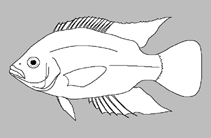
Body shape (shape guide): short and / or deep.
Body shape (shape guide): short and / or deep.
Found in river, about 15 m wide with an estimated depth of 50 cm, rocky with patches of sand and gravel and with few patches of submerged vegetation (Ref. 122072). It is suggested that this species feeds on insect larvae and detritus (Ref. 122072). It is a maternal mouthbrooder (Ref. 122072).
ライフサイクルと交尾行動 成熟 | 繁殖 | 放精 | 卵 | 生産力 | 幼生
主な参考文献
参考文献のアップロード | 参考文献 | コーディネーター : Kullander, Sven O. | 協力者
Schedel, F.D.B., V.M.S. Kupriyanov, C. Katongo and U.K. Schliewen, 2020. Palaeoplex gen. nov. and Lufubuchromis gen. non, two new monotypic cichlid genera (Teleostei: Cichlidae) from northern Zambia. Zootaxa 4718(2):191-229. (Ref. 122072)
CITES
Not Evaluated
人間に対する脅威
Harmless
人間の用途
FAO - Publication: search | FishSource |
より多くの情報
ライフサイクル
繁殖
成熟
成熟度/エラ
生産力
放精
産卵群
卵
卵の開発
幼生
幼生の動力
繁殖
成熟
成熟度/エラ
生産力
放精
産卵群
卵
卵の開発
幼生
幼生の動力
解剖学
カマ
脳
オトリス
カマ
脳
オトリス
生理学
体組成
栄養素
酸素消費
水泳タイプ
泳ぐ速さ
視覚色素
フィッシュ・サウンド
病気と寄生虫
毒性(LC50)
体組成
栄養素
酸素消費
水泳タイプ
泳ぐ速さ
視覚色素
フィッシュ・サウンド
病気と寄生虫
毒性(LC50)
遺伝子の
ゲノム
遺伝子の
ヘテロ接合性
遺伝
遺伝的多様性
ゲノム
遺伝子の
ヘテロ接合性
遺伝
遺伝的多様性
用具
特記事項
XMLをダウンロードして下さい
インターネットの情報源
AFORO (otoliths) | Aquatic Commons | BHL | Cloffa | Websites from users | Check FishWatcher | CISTI | Catalog of Fishes: 部類, 種 | DiscoverLife | ECOTOX | FAO - Publication: search | Faunafri | Fishipedia | Fishtrace | GloBI | Google Books | Google Scholar | Google | IGFA World Record | OneZoom | Open Tree of Life | Otolith Atlas of Taiwan Fishes | PubMed | Reef Life Survey | Socotra Atlas | TreeBase | 生命の木 | Wikipedia: 行く, 検索する | World Records Freshwater Fishing | Zoobank | 動物に関する記録
モデルに基づく推定値
系統多様性指数 (参照 82804): PD50 = 1.0000 [Uniqueness, from 0.5 = low to 2.0 = high].
Bayesian length-weight: a=0.01445 (0.00671 - 0.03113), b=2.99 (2.82 - 3.16), in cm total length, based on LWR estimates for this (Sub)family-body shape (Ref. 93245).
栄養段階 (参照 69278): 3.3 ±0.4 se; based on size and trophs of closest relatives
回復力 (参照 120179): 高い, 15か月以下の倍増期間の最小個体群 (Preliminary K or Fecundity.).