



Classificação / Nomes Nomes comuns | Sinônimos | Catalog of Fishes(Gênero, Espécies) | ITIS | CoL | WoRMS | Cloffa
> Galaxiiformes (Southern smelts) > Galaxiidae (Galaxiids) > Galaxiinae
Etymology: Galaxias: Greek, galaxias, ou = a kind of fish (Ref. 45335).
More on author: Jenyns.
Etymology: Galaxias: Greek, galaxias, ou = a kind of fish (Ref. 45335).
More on author: Jenyns.
Taxonomic Remarks
zzzAT STOCKS Galaxias maculatus has the most disjunct distribution of any freshwater species. This distribution is best explained by dispersal of whitebait larval stage throughout the sea (Berra et al. 1996). See McDowall (1971b) for a detailed description.
Meio ambiente: milieu / Zona climática / intervalo de profundidade / faixa de distribuição Ecologia
marinhas; Água doce; estuarina bentopelágico; catádromo (Ref. 138269). Temperate; 10°C - 22°C (Ref. 2060); 27°S - 56°S, 112°W - 56°W
Distribuição Territórios | Áreas da FAO | Ecossistemas | Ocorrências | Mapa de pontos | Introduções | Faunafri
Oceania: Australia (including Tasmania), Lord Howe Island, New Zealand and the Chatham Islands. South America: Ranges from along the Chilean side of the Andes near Valparaiso to the southern extremity of the island chain southeast of Tierra del Fuego. Also on the eastern side of the Andes in Argentina in isolated lakes (Meliquina, Traful, Nahuel Huapi, Gutierrez, and Pellegrini) which drain into the Atlantic Ocean via the Negro River. It occurs on Falkland Islands.
Tamanho / Peso / Idade
Maturidade: Lm ? range ? - ? cm
Max length : 19.0 cm SL macho/indeterminado; (Ref. 44894); common length : 10.0 cm TL macho/indeterminado; (Ref. 5259)
Max length : 19.0 cm SL macho/indeterminado; (Ref. 44894); common length : 10.0 cm TL macho/indeterminado; (Ref. 5259)
Descrição suscinta Chaves de identificação | Morfologia | Morfometria
Espinhos dorsais (total) : 0; Raios dorsais (total) : 10 - 12; Espinhos anais: 0; Raios anais : 15 - 17.
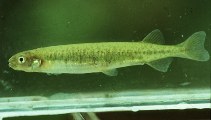
Body shape (shape guide): elongated.
Body shape (shape guide): elongated.
Facultative air-breathing (Ref. 126274); Adults occur in a wide variety of habitat, but mostly in still or slow-flowing waters, mainly in streams, rivers and lakes within a short distance of the sea. They can survive in salinities up to 50 ppt. They feed on aquatic and terrestrial insects, and crustaceans. Adults typically migrate downstream into estuaries during high spring tides in autumn to spawn on fringing vegetation. Spawning does not occur beyond the river estuaries, making this species 'only marginally catadromous' (Ref. 46888). Many perish after spawning but some survive another year. Eggs develop out of water for two weeks and hatch upon the arrival of the next spring tide. Newly hatched larvae spend their first 5-6 months at sea before returning to fresh shoals of whitebait during spring. An important component of whitebait fisheries throughout the Southern Hemisphere (Ref. 44894). Utilized fresh and eaten fried (Ref. 9988, 44894).
Ciclo de vida ou comportamento de acasalamento Maturidade | Reprodução | Desova | Ovos | Fecundidade | Larvas
For diadromous populations: deposit eggs on dense terrestrial vegetation that is flooded by the high tide. The eggs develop out of water in humid condition during the next 2 weeks. Hatching takes place when a second series of high tides again wash over the eggs. For landlocked population: fish migrate up to the tributary streams during floods. Deposit eggs on the flooded grassy banks and complete their development after the water level subsides. Hatching occurs during subsequent floods.
Referência principal
Carregar suas referências | Referências | Coordenador : Berra, Tim M. | Colaboradores
Allen, G.R., 1989. Freshwater fishes of Australia. T.F.H. Publications, Inc., Neptune City, New Jersey. (Ref. 5259)
Status na Lista Vermelha da UICN (Ref. 130435: Version 2025-2 (Global))
Segura ou pouco preocupante (LC) ; Date assessed: 12 February 2019
CITES
Not Evaluated
Ameaça para os humanos
Harmless
Uso pelos humanos
Pescarias: espécies comerciais; peixe esportivo: sim; isca: usually
FAO - Publication: search | FishSource | Sea Around Us
Mais informação
Ecologia Trófica
Itens alimentares (presas)
Composição da dieta
Consumo alimentar
Rações alimentares
Predadores
Itens alimentares (presas)
Composição da dieta
Consumo alimentar
Rações alimentares
Predadores
Dinâmica populacional
Parâmetros de crescimento
Idade máxima / tamanhos
Relação comprimento-peso.
Relação comprimento-comprimento.
Frequências de comprimento
Conversão de massa
Recrutamento
Abundância
Parâmetros de crescimento
Idade máxima / tamanhos
Relação comprimento-peso.
Relação comprimento-comprimento.
Frequências de comprimento
Conversão de massa
Recrutamento
Abundância
Ciclo de vida
Reprodução
Maturidade
Maturidade/Rel. das guelras
Fecundidade
Desova
Agregações de desova
Ovos
Desenvolvimento dos ovos
Larvas
Dinâmica larval
Reprodução
Maturidade
Maturidade/Rel. das guelras
Fecundidade
Desova
Agregações de desova
Ovos
Desenvolvimento dos ovos
Larvas
Dinâmica larval
Anatomia
Área branquial
Cérebro
Otólito
Área branquial
Cérebro
Otólito
Fisiologia
Composição corporal
Nutrientes
Consumo de oxigênio
Tipo de natação
Velocidade de natação
Pigmentos visuais
Som de peixe
Doenças e Parasitas
Toxicidade (LC50s)
Composição corporal
Nutrientes
Consumo de oxigênio
Tipo de natação
Velocidade de natação
Pigmentos visuais
Som de peixe
Doenças e Parasitas
Toxicidade (LC50s)
Relacionado a humanos
Sistemas de aquicultura
Perfis para aquacultura
Estirpes
Casos de Ciguatera
Selos, moedas, diversos.
Sistemas de aquicultura
Perfis para aquacultura
Estirpes
Casos de Ciguatera
Selos, moedas, diversos.
Ferramentas
Livro eletrônico | Guia de campo | Chaves de identificação | Ferramenta auxiliar de frequências de comprimento | Ferramenta sobre a história de vida | Mapa de pontos |
Catch-MSY |
Relatórios especiais
Checar Manutenção em Aquário | Checar Planilhas de Fatos sobre as Espécies | Checar Planilhas de Fatos sobre Aquicultura
Baixar XML
Fontes da internet
AFORO (otoliths) | Aquatic Commons | BHL | Cloffa | Websites from users | Checar Observador de Peixes (FishWatcher) | CISTI | Catalog of Fishes: Gênero, Espécies | DiscoverLife | ECOTOX | FAO - Publication: search | Faunafri | Fishipedia | Fishtrace | GloBI | Google Books | Google Scholar | Google | IGFA World Record | OneZoom | Open Tree of Life | Otolith Atlas of Taiwan Fishes | PubMed | Reef Life Survey | Socotra Atlas | TreeBase | Árvore da vida | Wikipedia: Ir para, procura | World Records Freshwater Fishing | Registro zoológico
Estimativas baseadas em modelos
Índice de diversidade filogenética (Ref. 82804): PD50 = 0.5000 [Uniqueness, from 0.5 = low to 2.0 = high].
Bayesian length-weight: a=0.00501 (0.00243 - 0.01032), b=3.16 (2.97 - 3.35), in cm total length, based on LWR estimates for this species & (Sub)family-body (Ref. 93245).
Nível Trófico (Ref. 69278): 3.2 ±0.2 se; based on diet studies.
Resiliência (Ref. 120179): médio(a), tempo mínimo de duplicação da população 1,4 - 4,4 anos (Fec=175).
Nutrientes (Ref. 124155): Calcium = 54 [29, 145] mg/100g; Iron = 0.34 [0.18, 0.78] mg/100g; Protein = 14.9 [12.6, 17.1] %; Omega3 = 0.495 [0.193, 1.245] g/100g; Selenium = 7.4 [2.8, 17.1] μg/100g; VitaminA = 35.1 [10.5, 122.9] μg/100g; Zinc = 1.21 [0.76, 1.87] mg/100g (wet weight);