



Cetorhinus maximus (Gunnerus, 1765)
Basking shark
Добавить Ваши наблюдения в Fish Watcher
| Native range | All suitable habitat | Point map | Year 2050 |

|
| This map was computer-generated and has not yet been reviewed. |
| Cetorhinus maximus AquaMaps Data sources: GBIF OBIS |
Загрузить свой Фото и Видео
изображения | Видео | Марки, монеты и прочее. | Изображение на Google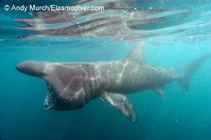 Cetorhinus maximus
Изображение сделано Murch, A.
изображения | Видео | Марки, монеты и прочее. | Изображение на Google
Изображение сделано Murch, A.
Классификация / Имена народные названия | синонимы | Catalog of Fishes(род, виды) | ITIS | CoL | WoRMS | Cloffa
Пластиножаберные (акулы и скаты) (sharks and rays) > Lamniformes (Mackerel sharks) > Cetorhinidae (Basking sharks)
Etymology: Cetorhinus: cetus (L.), from ketos (Gr.) whale, referring to its size; rhinus, an ancient name for sharks, from rhine (Gr.), rasp, alluding to a shark’s jagged, rasp-like skin (See ETYFish); maximus: Latin for greatest, being the largest known fish (i.e., non-mammalian aquatic vertebrate) at the time (superseded by Rhincodon typus) (See ETYFish).
Etymology: Cetorhinus: cetus (L.), from ketos (Gr.) whale, referring to its size; rhinus, an ancient name for sharks, from rhine (Gr.), rasp, alluding to a shark’s jagged, rasp-like skin (See ETYFish); maximus: Latin for greatest, being the largest known fish (i.e., non-mammalian aquatic vertebrate) at the time (superseded by Rhincodon typus) (See ETYFish).
Окружающая среда: среда / климатическая зона / пределы глубины / диапазон распространения экология
морской pelagic-oceanic; мигрирует в океане (Ref. 87829); пределы глубины 0 - 2000 m (Ref. 26346), usually 0 - ? m (Ref. 55197). Temperate; 6°C - 24°C (Ref. 88171); 75°N - 58°S, 111°E - 42°E (Ref. 84930)
распространение Территории | регионы FAO | Экосистемы | места находок | карта точек | интродукции | Faunafri
Cosmopolitan, frequent in cold to warm temperate waters; rare in equatorial waters (Ref. 48844). Highly migratory species. At risk of extinction by overfishing because of low to very low productivity (Ref. 36717).
Длина при первой зрелости / Размер / Вес / Возраст
половая зрелость: Lm 895.0, range 500 - 1000 cm
Max length : 1,520 cm TL самец/пол неопределен; (Ref. 247); 980.0 cm TL (female); common length : 700 cm TL самец/пол неопределен; (Ref. 6077); наибольший вес (опубликованные данные): 4.0 t (Ref. 4645)
Max length : 1,520 cm TL самец/пол неопределен; (Ref. 247); 980.0 cm TL (female); common length : 700 cm TL самец/пол неопределен; (Ref. 6077); наибольший вес (опубликованные данные): 4.0 t (Ref. 4645)
Краткое описание определительные ключи | морфология | морфометрия
колючие лучи спинного плавника (общее число) : 0; колючие лучи анального плавника: 0. Distinguished from all other sharks by the enormous gill slits practically encircling the head; dermal denticle gill rakers; pointed snout; huge, sub terminal mouth with minute hooked teeth; caudal peduncle with strong lateral keels, and lunate caudal fin. Body covered with placoid scales. Blackish to grey-brown, grey, or blue-grey, often with irregular white blotches under the head and abdomen (Ref. 43278). Also Ref. 309, 5983.
Body shape (shape guide): elongated; Cross section: circular.
Body shape (shape guide): elongated; Cross section: circular.
The second largest shark, reportedly reaching 1,220-1,520 cm TL (Ref. 247). Thought to live up to 50 years (Ref. 9030, 89083). Semi-oceanic or oceanic species, highly migratory (Ref. 43278). Found on continental and insular shelves, offshore and often close to land, just off the surf zone; enters enclosed bays (Ref. 247). Coastal-pelagic at 1 meter to unknown depths, probably epipelagic (Ref. 58302). Occurs singly, in pairs or groups of 3 or more, or in huge schools (group of up to 100 individuals has been reported) (Ref. 6871, 43278). Prefers water temperature between 8-16 °C (Ref. 88171). Makes extensive horizontal and vertical movements along the continental shelf and shelf edge to utilize productive feeding areas (Ref. 50200). During the summer months, it is found near the surface of boreal to warm-temperate areas (Ref. 43278) feeding on zooplankton by filtering (Ref. 88781). Found in deeper waters during winter (Ref. 6871, 50200, 58302). Undertakes long transoceanic migrations (e.g. from the British Isles to Newfoundland, Canada (Ref. 88824)) and moves between the northern and southern hemisphere in tropical mesopelagic water (Ref. 88825). These migrations have been found to cover distances of over 9,000 km. May form segregations by size or sex (Ref. 88171). Ovoviviparous (Ref. 50449). Regarded as ordinarily harmless and inoffensive but potentially dangerous if attacked (particularly when harpooned) (Ref. 247). In Bay of Fundy, Canada parasitic lampreys have been found attached to the back of basking sharks and sucking their blood (Ref. 83375). Utilized fresh, frozen and dried, or salted (Ref. 9987). Also valued for its liver for oil, fins for soup, hide for leather and carcass for fishmeal (Ref. 247). May be a potential source of anti-carcinoma drugs (Ref. 6034, 6035). Used in Chinese medicine (Ref. 12166). Threatened due to bycatch fisheries (Ref. 83294).
Жизненный цикл и брачное поведение половая зрелость | размножение | нерест | икра | Плодовитость | личинки
Distinct pairing with embrace (Ref. 205). Courtship behaviour patterns associated with elasmobranch reproduction were documented from an aerial observation which include 'parallel swimming', 'pectoral biting', 'nudging', and 'male on top of female'. Other mating behaviours particular to this species from the same aerial observation include nose-to-tail following; flank approach; close approach involving rostral contact or proximity with the gill, pectoral fin, vent, and dorsum; and echelon swimming (Ref. 37026). Exhibit ovoviparity (aplacental viviparity), with embryos feeding on other ova produced by the mother (oophagy) after the yolk sac is absorbed (Ref. 50449). Estimated gestation period 12-36 months (Ref. 247, 1765, 9030, 88829); TL at birth estimated between 150-200 cm; mating thought to take place during early summer; a female giving birth to young captured in August in Norwegian waters (Ref. 5983). Over a study period of 5 years, courtship-like behaviour was observed off southwest England between May and July, always in surface waters along thermal fronts; because actual mating was not observed, this may occur in deeper water (Ref. 88831). A one-year resting period between pregnancies is thought to occur, resulting in a 2-4 year interval between litters (Ref. 9030, 1765, 88829). Only one pregnant female has been observed giving birth to a litter of 6 pups (Ref. 88830).
Основная ссылка
Загрузите свои рекомендации | ссылки | координатор : Compagno, Leonard J.V. | соавторы
Compagno, L.J.V., 1984. FAO Species Catalogue. Vol. 4. Sharks of the world. An annotated and illustrated catalogue of shark species known to date. Part 1 - Hexanchiformes to Lamniformes. FAO Fish. Synop. 125(4/1):1-249. Rome, FAO. (Ref. 247)
Статус Красного Списка МСОП (Ref. 130435: Version 2025-2 (Global))
Под угрозой исчезновения (EN) (A2bd); Date assessed: 07 November 2018
Угроза для людей
Traumatogenic (Ref. 247)
Использование человеком
рыболовство: коммерческий
FAO - рыболовство: посадки, Видовой профиль; Publication: search | FIRMS - Stock assessments | FishSource | Море вокруг нас
дополнительная информация
Трофическая экология
Пищевые предметы (добыча)
состав пищи
потребление пищи
Продовольственные пайки
хищники
Пищевые предметы (добыча)
состав пищи
потребление пищи
Продовольственные пайки
хищники
Динамика численности населения
Параметры роста
Макс. возраст / размер
Отношение длины к весу.
Отношение длины к длине.
Размерный состав
Преобразование массы
пополнение
численность
Параметры роста
Макс. возраст / размер
Отношение длины к весу.
Отношение длины к длине.
Размерный состав
Преобразование массы
пополнение
численность
Жизненный цикл
размножение
половая зрелость
Зрелость/Жиры относительно.
Плодовитость
нерест
Нерестовые скопления
икра
Развитие икры
личинки
динамика численности личинок
размножение
половая зрелость
Зрелость/Жиры относительно.
Плодовитость
нерест
Нерестовые скопления
икра
Развитие икры
личинки
динамика численности личинок
Физиология
Состав тела
Питательные вещества
Потребление кислорода
Тип плавания
Скорость плавания
Зрительные пигменты
Звук рыбы
Болезни и паразиты
Токсичность (LC50s)
Состав тела
Питательные вещества
Потребление кислорода
Тип плавания
Скорость плавания
Зрительные пигменты
Звук рыбы
Болезни и паразиты
Токсичность (LC50s)
Связанные с человеком
Системы аквакультуры
особенности рыбоводства
степень растяжения
Случаи заболевания сигуатерой
Марки, монеты и прочее.
Системы аквакультуры
особенности рыбоводства
степень растяжения
Случаи заболевания сигуатерой
Марки, монеты и прочее.
инструменты
Электронная книга | полевой определитель | определительные ключи | Длина-Частота | онтогенез | карта точек |
Catch-MSY |
Специальные отчеты
Проверить содержание в аквариумах | Проверить опубликованные видовые данные | Проверить опубликованные данные по аквакультуре
Скачать в формате XML
ресурсы в Интернет
AFORO (otoliths) | Aquatic Commons | BHL | Cloffa | Websites from users | Проверить FishWatcher | CISTI | Catalog of Fishes: род, виды | DiscoverLife | DORIS | ECOTOX | FAO - рыболовство: посадки, Видовой профиль; Publication: search | Faunafri | Fishipedia | Fishtrace | GloBI | Google Books | Google Scholar | Google | IGFA World Record | национальные базы данных | OneZoom | Open Tree of Life | Otolith Atlas of Taiwan Fishes | PubMed | Reef Life Survey | Socotra Atlas | TreeBase | Tree of Life | Wikipedia: Вперёд, поиск | World Records Freshwater Fishing | Зоологическая летопись
Оценки, основанные на моделях
Предпочтительная температура (ссылка 123201): 5.4 - 22.7, mean 11.4 °C (based on 10877 cells).
Индекс филогенетического разнообразия (ссылка 82804): PD50 = 1.5000 [Uniqueness, from 0.5 = low to 2.0 = high].
Bayesian length-weight: a=0.00389 (0.00180 - 0.00842), b=3.12 (2.94 - 3.30), in cm total length, based on all LWR estimates for this body shape (Ref. 93245).
Трофический уровень (ссылка 69278): 3.2 ±0.3 se; based on diet studies.
Generation time: 17.7 ( na - na) years. Estimated as median ln(3)/K based on 1 growth studies.
устойчивость к внешним воздействиям (ссылка 120179): очень низкий, минимальное время удвоения популяции более 14 лет (Fec=1-2; Musick et al. 2000 (Ref. 36717)).
Prior r = 0.07, 95% CL = 0.04 - 0.10, Based on 2 data-limited stock assessments.
Питательные вещества (Ref. 124155): Calcium = 2.25 [0.46, 11.12] mg/100g; Iron = 0.218 [0.050, 0.684] mg/100g; Protein = 19.3 [16.7, 21.8] %; Omega3 = 0.317 [0.116, 0.875] g/100g; Selenium = 38.4 [9.2, 129.2] μg/100g; VitaminA = 2.24 [0.46, 11.41] μg/100g; Zinc = 0.226 [0.103, 0.441] mg/100g (wet weight);