



อัพโหลดของคุณ ภาพถ่าย และ วิดีโอ
รูปภาพหลายรูป | Google image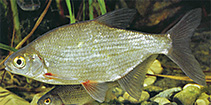 Blicca bjoerkna
ภาพโดย Hartl, A.
รูปภาพหลายรูป | Google image
ภาพโดย Hartl, A.
การจำแนกประเภท / ชื่อ ชื่อสามัญ | ชื่อพ้อง | Catalog of Fishes(สกุล, ชนิด) | ITIS | CoL | WoRMS | Cloffa
สิ่งแวดล้อม : สิ่งแวดล้อม / เขตภูมิอากาศ / ระดับความลึก / ระยะการกระจายสินค้า นิเวศวิทยา
; น้ำจืด; กร่อย สัตว์น้ำหน้าดิน; สัตว์น้ำจืดที่มีการอพยพอย่างแท้จริงภายในแหล่งน้ำจืดเท่านั้น (Ref. 51243); ระดับความลึก 0 - ? m. Temperate; 4°C - 20°C (Ref. 2059); 65°N - 40°N
การแพร่กระจาย อาณาเขต | พื้นที่จำแนกตาม FAO | ระบบนิเวศหลายระบบ | การปรากฏขึ้น,การเกิดขึ้น,พบ | ตำแหน่งบนแผนที่ | การแนะนำ | Faunafri
Europe and Asia: North, Baltic, White, Black (south to Rioni drainage) and Caspian Sea basins, Atlantic basin southward to Adour drainage (France; possibly introduced southward of Loire) and Mediterranean basin in France (Hérault and Rhône drainages). In Aral, Marmara and Anatolian Black Sea basins west of Ankara. Naturally absent from Iberian Peninsula, Italy, Adriatic basin, Crimea, Great Britain (except southeast), Scandinavia north of Sundsvall (Sweden) and 65° N (Finland). Locally introduced in Spain and northeastern Italy; in France, apparently introduced in smal coastal drainages of Var.
ความยาวเมื่อครบกำหนดครั้งแรก / ขนาด / น้ำหนัก / อายุ
วัยเจริญพันธุ์: Lm ? range ? - ? cm
Max length : 45.5 cm TL เพศผู้/กระเทย; (Ref. 88166); common length : 20.0 cm TL เพศผู้/กระเทย; (Ref. 556); น้ำหนักสูงสุดที่มีการรายงาน: 1.0 kg (Ref. 30578)
Max length : 45.5 cm TL เพศผู้/กระเทย; (Ref. 88166); common length : 20.0 cm TL เพศผู้/กระเทย; (Ref. 556); น้ำหนักสูงสุดที่มีการรายงาน: 1.0 kg (Ref. 30578)
คำอธิบายสั้นๆ เครื่องมือที่ใช้ในการแยกชนิดสัตว์,สิ่งมีชีวิตออกจากกัน | สัณฐานวิทยา | ความยาวต่างๆ
เงี่ยงครีบหลัง (รวม) : 3; ก้านครีบอ่อนที่หาง (รวม) : 8; เงี่ยงครีบก้น: 3; ก้านครีบอ่อนที่ก้น: 19 - 22; สัตว์มีกระดูกสันหลัง: 39 - 40. The only species of the genus which can be diagnosed from similar species of genera Ballerus, Blicca and Vimba by having the following characters: mouth sub-inferior, which can not be extended as a tube; scales on lateral line 43-46 + 2-3 ; anal fin with 19-23½ branched rays; eye diameter about equal to snout length in individuals larger than 10 cm SL; pharyngeal teeth 2,5-2,5; and orange or reddish base of paired fins (Ref. 59043). Caudal fin with 17-19 rays (Ref. 2196).
Body shape (shape guide): fusiform / normal.
Body shape (shape guide): fusiform / normal.
Gregarious and frequents stagnant waters of lakes and reservoirs, rivers and canals with calm waters. Occurs in a wide variety of shallow, warm lowland lakes and slow-flowing lower reaches of large rivers and canals. Frequently very abundant on bottom of large sandy rivers. Larvae live in still water bodies. Mainly nocturnal. Feeds on benthic invertebrates. Spawns along shores on submerged vegetations, roots or even on shallow gravel bottom (Ref. 59043). Reproduction takes place in May to July. Exhibits polyandry (Ref. 6114). Regularly hybridizes with Vimba vimba (Ref. 59043). Of little interest to game fishers and consumers (Ref. 30578). Unpopular with commercial fishers due to its small size and competition with more desired species.
วงจรชีวิตและพฤติกรรมการผสมพันธุ์ วัยเจริญพันธุ์ | การสืบพันธุ์ | การวางไข่ | เซลสืบพันธ์ของเพศเมีย(ไข่) | ความดกของไข่ | ตัวอ่อน
Exhibits polyandry, with courting tactics developed by males. Trembling and splashing movements signal release of eggs and sperms on plant substratum (Ref. 6114). Eggs are sticky (Ref. 59043).
อ้างอิงหลัก
อัพโหลดข้อมูลอ้างอิงของคุณ | อ้างอิง | ผู้ประสานงาน | ผู้ร่วมมือ
Kottelat, M. and J. Freyhof, 2007. Handbook of European freshwater fishes. Publications Kottelat, Cornol and Freyhof, Berlin. 646 pp. (Ref. 59043)
สถานะบัญชีแดงของ IUCN (Ref. 130435: Version 2025-2 (Global))
Least Concern (LC) ; Date assessed: 27 May 2022
CITES
Not Evaluated
ภัยคุกคามต่อมนุษย์
Harmless
การใช้ของมนุษย์
การประมง: มีการค้าเพียงเล็กน้อย; สถานที่แสดงสัตว์และพืชน้ำ: สถานแสดงสัตว์น้ำของรัฐ; เหยื่อ: occasionally
FAO - ระบบการเพาะเลี้ยงสัตว์น้ำ: การผลิต; การประมง: การลงจอด; Publication: search | FishSource |
ข้อมูลเพิ่มเติม
พลวัตของประชากร
พารามิเตอร์การเจริญเติบโต
อายุสูงสุด / ขนาด
ความยาว-น้ำหนักสัมพันธ์
ความยาว-ความยาวสัมพันธ์
ความยาว-ความถี่
การแปลงมวล
การทดแทนที่
อุดมสมบรูณ์
พารามิเตอร์การเจริญเติบโต
อายุสูงสุด / ขนาด
ความยาว-น้ำหนักสัมพันธ์
ความยาว-ความยาวสัมพันธ์
ความยาว-ความถี่
การแปลงมวล
การทดแทนที่
อุดมสมบรูณ์
วงจรชีวิต
การสืบพันธุ์
วัยเจริญพันธุ์
ความสมบูรณ์พันธุ์/เหงือกที่เกี่ยวข้อง
ความดกของไข่
การวางไข่
การรวมตัวของสปอน
เซลสืบพันธ์ของเพศเมีย(ไข่)
การพัฒนาไข่
ตัวอ่อน
พลวัตของสัตว์น้ำวัยอ่อน
การสืบพันธุ์
วัยเจริญพันธุ์
ความสมบูรณ์พันธุ์/เหงือกที่เกี่ยวข้อง
ความดกของไข่
การวางไข่
การรวมตัวของสปอน
เซลสืบพันธ์ของเพศเมีย(ไข่)
การพัฒนาไข่
ตัวอ่อน
พลวัตของสัตว์น้ำวัยอ่อน
การแพร่กระจาย
อาณาเขต
พื้นที่จำแนกตาม FAO
ระบบนิเวศหลายระบบ
การปรากฏขึ้น,การเกิดขึ้น,พบ
การแนะนำ
BRUVS - วิดีโอ
อาณาเขต
พื้นที่จำแนกตาม FAO
ระบบนิเวศหลายระบบ
การปรากฏขึ้น,การเกิดขึ้น,พบ
การแนะนำ
BRUVS - วิดีโอ
สรีรวิทยา
องค์ประกอบของร่างกาย
สารอาหาร
การใช้ออกซิเจน
ประเภทการว่ายน้ำ
ระดับความเร็วในการว่ายน้ำ
เม็ดสีที่มองเห็นได้
เสียงปลา
โรคและปรสิต
ความเป็นพิษ (LC50s)
องค์ประกอบของร่างกาย
สารอาหาร
การใช้ออกซิเจน
ประเภทการว่ายน้ำ
ระดับความเร็วในการว่ายน้ำ
เม็ดสีที่มองเห็นได้
เสียงปลา
โรคและปรสิต
ความเป็นพิษ (LC50s)
เกี่ยวข้องกับมนุษย์
ระบบการเพาะเลี้ยงสัตว์น้ำ
ประวัติการเพาะเลี้ยงสัตว์น้ำ
สายพันธุ์
กรณีซิเกวเทอรา
แสตมป์ เหรียญ อื่นๆ
ระบบการเพาะเลี้ยงสัตว์น้ำ
ประวัติการเพาะเลี้ยงสัตว์น้ำ
สายพันธุ์
กรณีซิเกวเทอรา
แสตมป์ เหรียญ อื่นๆ
เครื่องมือ
หนังสืออิเล็กทรอนิกส์ | คู่มือภาคสนาม | เครื่องมือที่ใช้ในการแยกชนิดสัตว์,สิ่งมีชีวิตออกจากกัน | ผู้มีความชำนาญในเรื่องความถี่ของความยาว | เครื่องมือในการศึกษาชีวประวัติ | ตำแหน่งบนแผนที่ |
จับ-MSY |
รายงานพิเศษ
ตรวจสอบการบำรุงรักษาตู้ปลา | ตรวจสอบเอกสารข้อเท็จจริงเกี่ยวกับสายพันธุ์ | ตรวจสอบเอกสารข้อเท็จจริงเกี่ยวกับการเพาะเลี้ยงสัตว์น้ำ
ดาวน์โหลด XML
หน้าสรุป | ข้อมูลสำคัญ | ชื่อสามัญ | ภาพถ่าย
แหล่งที่มาจากอินเตอร์เน็ต
AFORO (otoliths) | Alien/Invasive Species database | Aquatic Commons | BHL | Cloffa | Websites from users | Check FishWatcher | CISTI | Catalog of Fishes: สกุล, ชนิด | DiscoverLife | ECOTOX | FAO - ระบบการเพาะเลี้ยงสัตว์น้ำ: การผลิต; การประมง: การลงจอด; Publication: search | Faunafri | Fishipedia | Fishtrace | GloBI | Google Books | Google Scholar | Google | IGFA World Record | ฐานข้อมูลแห่งชาติ | OneZoom | Open Tree of Life | Otolith Atlas of Taiwan Fishes | สถานแสดงสัตว์น้ำของรัฐ | PubMed | Reef Life Survey | Socotra Atlas | TreeBase | แผนภูมิชีวิตแบบต้นไม้ | Wikipedia: Go, ค้นหา | World Records Freshwater Fishing | บันทึกทางด้านสัตววิทยา
การประมาณค่าตามแบบจำลอง
ดัชนีความหลากหลายทางวิวัฒนาการ (อ้างอิง 82804): PD50 = 1.0000 [Uniqueness, from 0.5 = low to 2.0 = high].
Bayesian length-weight: a=0.00741 (0.00667 - 0.00824), b=3.15 (3.12 - 3.18), in cm total length, based on LWR estimates for this species (Ref. 93245).
ระดับชั้นอาหาร (อ้างอิง 69278): 3.2 ±0.0 se; based on diet studies.
ความสามารถในการกลับคืนสู่ปกติ (อ้างอิง 120179): ขนาดกลาง, เวลาต่ำสุดที่จะทำให้ประชากรเพิ่มขึ้นเป็น 2 เท่าใช้เวลา 1.4 - 4.4 ปี (K=0.10-0.27; tm=3-4).
สารอาหาร (Ref. 124155): Calcium = 66.8 [32.4, 112.3] mg/100g; Iron = 0.407 [0.243, 0.722] mg/100g; Protein = 17.7 [16.1, 19.1] %; Omega3 = 0.605 [0.278, 1.290] g/100g; Selenium = 7.59 [3.59, 16.22] μg/100g; VitaminA = 19.1 [6.1, 60.6] μg/100g; Zinc = 0.826 [0.581, 1.185] mg/100g (wet weight);