



Tải lên của bạn hình ảnh Và Video
Các tranh (Ảnh) | Google image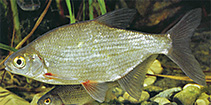 Blicca bjoerkna
Hình ảnh của Hartl, A.
Các tranh (Ảnh) | Google image
Hình ảnh của Hartl, A.
Phân loại / Tên Tên thường gặp | Các synonym ( Các tên trùng) | Catalog of Fishes(Giống, Các loài) | ITIS | CoL | WoRMS | Cloffa
Môi trường: môi trường / vùng khí hậu / Mức độ sâu / phạm vi phân phối Sinh thái học
; nước ngọt; thuộc về nước lợ gần đáy; di cư trong nước ngọt (Ref. 51243); mức độ sâu 0 - ? m. Temperate; 4°C - 20°C (Ref. 2059); 65°N - 40°N
Sự phân bố Lãnh thổ | Các khu vực của FAO | Các hệ sinh thái | Những lần xuất hiện | Bản đồ điểm | Những chỉ dẫn | Faunafri
Europe and Asia: North, Baltic, White, Black (south to Rioni drainage) and Caspian Sea basins, Atlantic basin southward to Adour drainage (France; possibly introduced southward of Loire) and Mediterranean basin in France (Hérault and Rhône drainages). In Aral, Marmara and Anatolian Black Sea basins west of Ankara. Naturally absent from Iberian Peninsula, Italy, Adriatic basin, Crimea, Great Britain (except southeast), Scandinavia north of Sundsvall (Sweden) and 65° N (Finland). Locally introduced in Spain and northeastern Italy; in France, apparently introduced in smal coastal drainages of Var.
Chiều dài lúc trưởng thành đầu tiên / Bộ gần gũi / Khối lượng (Trọng lượng) / Tuổi
Chín muồi sinh dục: Lm ? range ? - ? cm
Max length : 45.5 cm TL con đực/không giới tính; (Ref. 88166); common length : 20.0 cm TL con đực/không giới tính; (Ref. 556); Khối lượng cực đại được công bố: 1.0 kg (Ref. 30578)
Max length : 45.5 cm TL con đực/không giới tính; (Ref. 88166); common length : 20.0 cm TL con đực/không giới tính; (Ref. 556); Khối lượng cực đại được công bố: 1.0 kg (Ref. 30578)
Mô tả ngắn gọn Khóa để định loại | Hình thái học | Sinh trắc học
Các tia vây lưng cứng (tổng cộng) : 3; Các vây lưng mềm (tổng cộng) : 8; Tia cứng vây hậu môn: 3; Tia mềm vây hậu môn: 19 - 22; Động vật có xương sống: 39 - 40. The only species of the genus which can be diagnosed from similar species of genera Ballerus, Blicca and Vimba by having the following characters: mouth sub-inferior, which can not be extended as a tube; scales on lateral line 43-46 + 2-3 ; anal fin with 19-23½ branched rays; eye diameter about equal to snout length in individuals larger than 10 cm SL; pharyngeal teeth 2,5-2,5; and orange or reddish base of paired fins (Ref. 59043). Caudal fin with 17-19 rays (Ref. 2196).
Body shape (shape guide): fusiform / normal.
Body shape (shape guide): fusiform / normal.
Gregarious and frequents stagnant waters of lakes and reservoirs, rivers and canals with calm waters. Occurs in a wide variety of shallow, warm lowland lakes and slow-flowing lower reaches of large rivers and canals. Frequently very abundant on bottom of large sandy rivers. Larvae live in still water bodies. Mainly nocturnal. Feeds on benthic invertebrates. Spawns along shores on submerged vegetations, roots or even on shallow gravel bottom (Ref. 59043). Reproduction takes place in May to July. Exhibits polyandry (Ref. 6114). Regularly hybridizes with Vimba vimba (Ref. 59043). Of little interest to game fishers and consumers (Ref. 30578). Unpopular with commercial fishers due to its small size and competition with more desired species.
Vòng đời và hành vi giao phối Chín muồi sinh dục | Sự tái sinh sản | Đẻ trứng | Các trứng | Sự sinh sản | Ấu trùng
Exhibits polyandry, with courting tactics developed by males. Trembling and splashing movements signal release of eggs and sperms on plant substratum (Ref. 6114). Eggs are sticky (Ref. 59043).
Tài liệu tham khảo chính
Tải lên tài liệu tham khảo của bạn | Các tài liệu tham khảo | Người điều phối | Người cộng tác
Kottelat, M. and J. Freyhof, 2007. Handbook of European freshwater fishes. Publications Kottelat, Cornol and Freyhof, Berlin. 646 pp. (Ref. 59043)
Tình trạng Sách đỏ IUCN (Ref. 130435: Version 2025-2 (Global))
Least Concern (LC) ; Date assessed: 27 May 2022
CITES
Not Evaluated
Mối đe dọa đối với con người
Harmless
Sử dụng của con người
Các nghề cá: buôn bán nhỏ; Bể nuôi cá: Bể cá công cộng; mồi: occasionally
FAO - Hệ thống nuôi trồng thủy sản: sản xuất; Các nghề cá: hạ cánh; Publication: search | FishSource |
Thêm thông tin
Sinh thái dinh dưỡng
Thức ăn (con mồi)
Thành phần thức ăn
Thành phần thức ăn
Khẩu phần ăn
Các động vật ăn mồi
Thức ăn (con mồi)
Thành phần thức ăn
Thành phần thức ăn
Khẩu phần ăn
Các động vật ăn mồi
Biến động dân số
Các thông số tăng trưởng
Độ tuổi / kích thước tối đa
Chiều dài-trọng lượng tương đối
Chiều dài-chiều dài tương đối.
Chiều dài-tần số
Chuyển đổi khối lượng
Bổ xung
Sự phong phú
Các thông số tăng trưởng
Độ tuổi / kích thước tối đa
Chiều dài-trọng lượng tương đối
Chiều dài-chiều dài tương đối.
Chiều dài-tần số
Chuyển đổi khối lượng
Bổ xung
Sự phong phú
Vòng đời
Sự tái sinh sản
Chín muồi sinh dục
Độ trưởng thành/Mang liên quan
Sự sinh sản
Đẻ trứng
Tập hợp sinh sản
Các trứng
Sự phát triển của trứng
Ấu trùng
Sự biến động ấu trùng
Sự tái sinh sản
Chín muồi sinh dục
Độ trưởng thành/Mang liên quan
Sự sinh sản
Đẻ trứng
Tập hợp sinh sản
Các trứng
Sự phát triển của trứng
Ấu trùng
Sự biến động ấu trùng
Sự phân bố
Lãnh thổ
Các khu vực của FAO
Các hệ sinh thái
Những lần xuất hiện
Những chỉ dẫn
BRUVS - Video
Lãnh thổ
Các khu vực của FAO
Các hệ sinh thái
Những lần xuất hiện
Những chỉ dẫn
BRUVS - Video
Sinh lý học
Thành phần cơ thể
Chất dinh dưỡng
Thành phần ô-xy
Kiểu bơi
Tốc độ bơi
Sắc tố thị giác
Tiếng cá
Bệnh tật & Ký sinh trùng
Độc tính (LC50)
Thành phần cơ thể
Chất dinh dưỡng
Thành phần ô-xy
Kiểu bơi
Tốc độ bơi
Sắc tố thị giác
Tiếng cá
Bệnh tật & Ký sinh trùng
Độc tính (LC50)
Liên quan đến con người
Hệ thống nuôi trồng thủy sản
Các tổng quan nuôi trồng thủy sản
Các giống
Các trường hợp ngộ độc Ciguatera
Tem, tiền xu, v.v.
Hệ thống nuôi trồng thủy sản
Các tổng quan nuôi trồng thủy sản
Các giống
Các trường hợp ngộ độc Ciguatera
Tem, tiền xu, v.v.
Các công cụ
Sách điện tử | Hướng dẫn hiện trường | Khóa để định loại | Tần suất chiều dài Wizard | Công cụ của vòng đời | Bản đồ điểm |
Bắt-MSY |
Báo cáo đặc biệt
Kiểm tra bảo trì bể cá | Kiểm tra các tờ thông tin về loài | Kiểm tra các tờ thông tin về nuôi trồng thủy sản
Tải xuống XML
Các nguồn internet
AFORO (otoliths) | Alien/Invasive Species database | Aquatic Commons | BHL | Cloffa | Websites from users | Check FishWatcher | CISTI | Catalog of Fishes: Giống, Các loài | DiscoverLife | ECOTOX | FAO - Hệ thống nuôi trồng thủy sản: sản xuất; Các nghề cá: hạ cánh; Publication: search | Faunafri | Fishipedia | Fishtrace | GloBI | Google Books | Google Scholar | Google | IGFA World Record | Các cơ sở dữ liệu quốc gia | OneZoom | Open Tree of Life | Otolith Atlas of Taiwan Fishes | Bể cá công cộng | PubMed | Reef Life Survey | Socotra Atlas | TreeBase | Cây Đời sống | Wikipedia: Go, tìm | World Records Freshwater Fishing | Tạp chí Zoological Record
Ước tính dựa trên mô hình
Chỉ số đa dạng phát sinh loài (Tài liệu tham khảo 82804): PD50 = 1.0000 [Uniqueness, from 0.5 = low to 2.0 = high].
Bayesian length-weight: a=0.00741 (0.00667 - 0.00824), b=3.15 (3.12 - 3.18), in cm total length, based on LWR estimates for this species (Ref. 93245).
Mức dinh dưỡng (Tài liệu tham khảo 69278): 3.2 ±0.0 se; based on diet studies.
Thích nghi nhanh (Tài liệu tham khảo 120179): Trung bình, thời gian nhân đôi của chủng quần tối thiểu là 1.4 - 4.4 năm (K=0.10-0.27; tm=3-4).
Chất dinh dưỡng (Ref. 124155): Calcium = 66.8 [32.4, 112.3] mg/100g; Iron = 0.407 [0.243, 0.722] mg/100g; Protein = 17.7 [16.1, 19.1] %; Omega3 = 0.605 [0.278, 1.290] g/100g; Selenium = 7.59 [3.59, 16.22] μg/100g; VitaminA = 19.1 [6.1, 60.6] μg/100g; Zinc = 0.826 [0.581, 1.185] mg/100g (wet weight);